The episode in detail
From journalism to new ecological stories
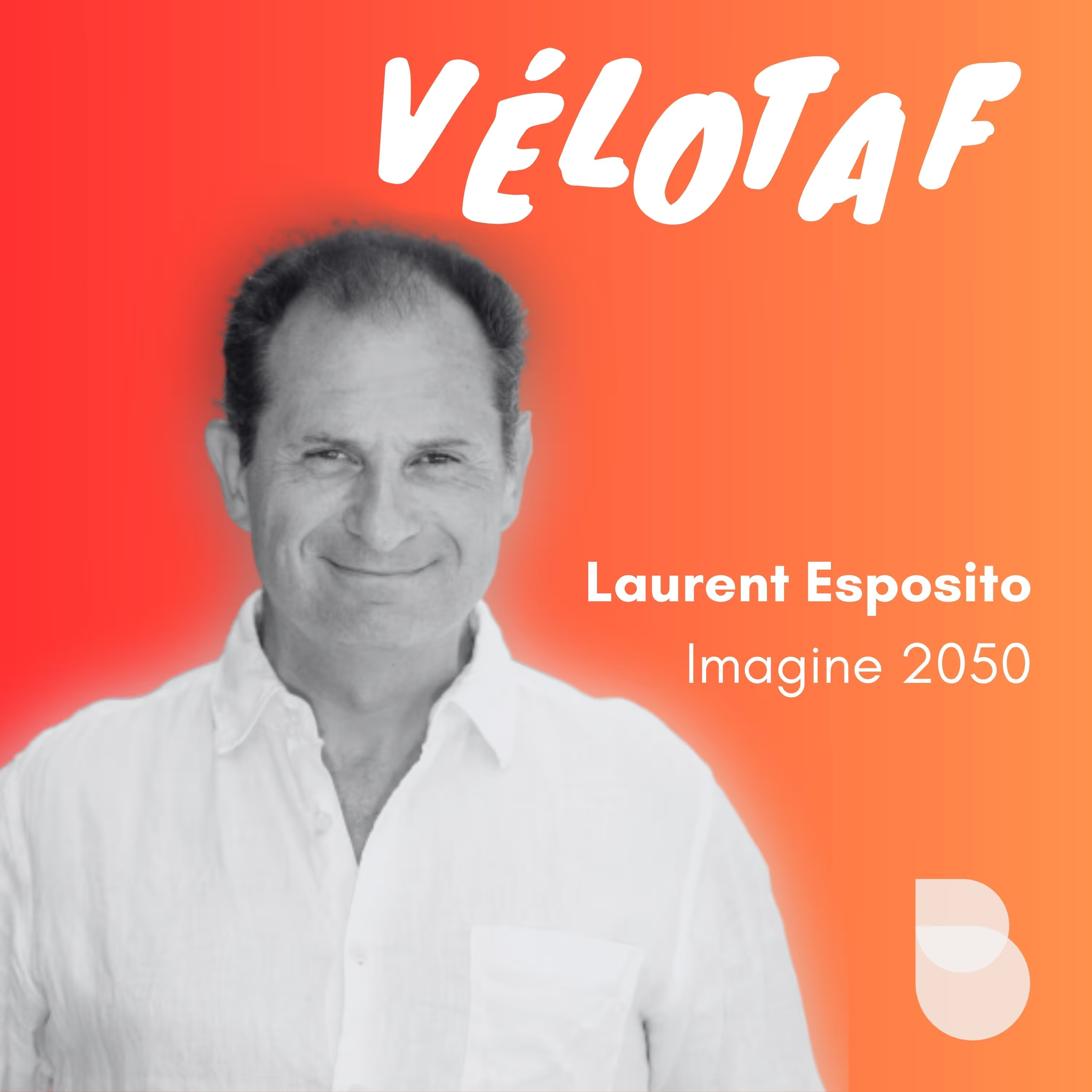
Laurent Esposito worked as a reporter and presenter in French broadcast media during the 1990s, trained at the Grenoble school of journalism. After a decade in digital media, he decided to bring his career into line with his ecological convictions. He passed through the Institut des Futurs Souhaitables, ran the Fresque du Climat, then joined Imagine 2050 alongside Magali Payen, founder of the On est prêt movement.
“I decided that for the rest of my working life, I was going to do a job connected to ecological issues, with meaning and impact.”
Imagine 2050 works with cultural industries, media, TV series, publishing houses and influencers to build positive stories about the ecological transition into their content. The team notably fed material to the writers of Plus belle la vie for a story arc in which a character becomes an eco-activist and saves trees from land being built over.
New stories: moving beyond collapse and techno-solutionism
For Laurent, two imaginaries dominate the media today: collapse thinking (Mad Max, Blade Runner, a dark future) and techno-solutionism (the belief that technological innovation will solve everything, with green planes and green cars). Between the two, an essential story is missing: that of desirable sobriety.
“How do we make this sobriety desirable, how can we be happier with less, but perhaps better. That’s the whole challenge around this ecological turning point.”
Bike commuting is part of this story. It does not stop at being a small individual gesture: it is a structural issue that raises questions about infrastructure, company policies and collective choices. Where do you park your bike at the office? Can you take a shower on arrival? These questions go beyond the individual and are a matter for companies and local authorities.
Financial aid and the sustainable mobility allowance
Laurent points to the existing schemes for cutting the cost of a bike: means-tested state aid for buying a new bike, regional grants (in Île-de-France, he got a third of the price of his Brompton refunded), and grants from local councils.
On the usage side, the sustainable mobility allowance lets participating companies reimburse employees who cycle to work up to €500 a year. A scheme that is still too little known, that can be combined with other forms of aid, and that can make a real difference for households on modest incomes.
Infrastructure and safety: the barriers to overcome
Despite the progress brought by temporary cycle tracks during the pandemic, Laurent points to two persistent obstacles. The first is road safety: junctions need to be made safer, signage needs improving, and cycle lanes need to be widened and protected. Many Parisians still say they don’t feel safe on a bike, even with the existing cycle tracks.
The second is the security of the bike itself. The anecdote about the musée d’Orsay says it all: Laurent turns up with his folded Brompton, security refuses to let him in, eventually gives way as an exception, but warns that next time the answer will be no.
“There’s still work to do on welcoming folding bikes. But there could also be a secure bike garage at the musée d’Orsay.”
The folding bike, a conversation catalyst
Laurent rides a Brompton every day, backed up by a more ordinary Decathlon bike as a plan B. The Brompton is his main bike commuting tool, and also a real conversation starter. Unfolding or folding this bike in the street always sparks reactions: baffled passers-by, questions about how practical it is, exchanges about cost, multimodal travel, and life without a car.
“The folding bike is a conversation starter that’s just magic. And after that you can put whatever you like behind it.”
He covers between 200 and 300 kilometres a month, with an annual service costing €50 and zero incidents in two years. Bromptons are known for reselling at their original purchase price, which makes them an investment rather than an expense.
Spreading the joy of the bike
Laurent’s central message goes beyond bike commuting: showing your joy at being on a bike is an act of activism. On a rainy day, wearing his fluorescent yellow poncho, he unfolds his Brompton in front of a restaurant terrace under the astonished eyes of the customers. For him, these small everyday scenes are the best advert for the bike and embody the positive stories that Imagine 2050 wants to see multiply in the media.
“Show your joy at being on a bike because it’s contagious.”