The episode in detail
GeoVelo, the GPS designed for everyday cyclists
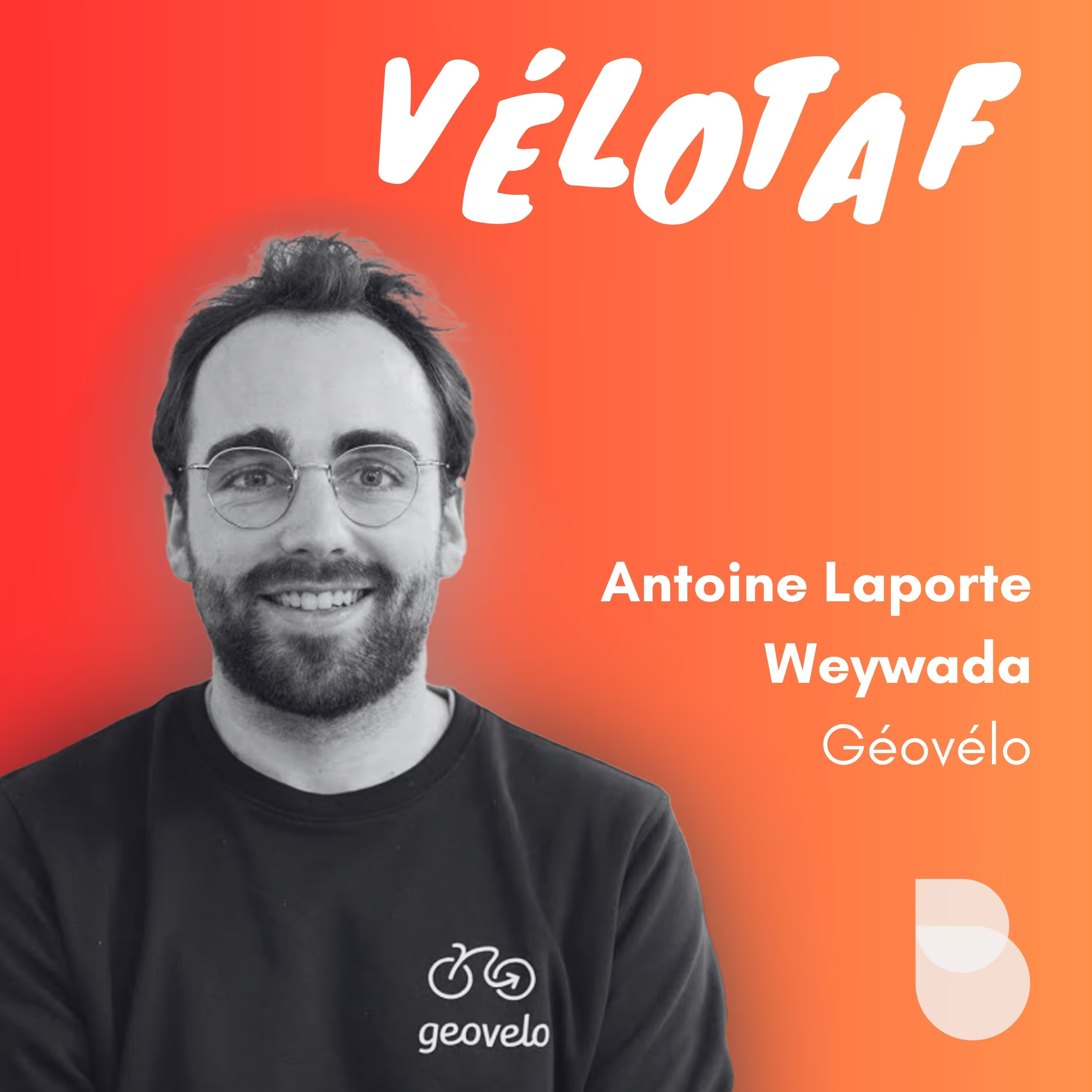
GeoVelo offers two things: a route-planning app dedicated to cycling and data services for local authorities. Antoine Laporte Weywada, 31, an engineer by training who has worked in transport consulting and at the Autonomy trade show, joined the startup to lead this dual mission. The app calculates safe routes by favouring cycle tracks, greenways and quiet back streets. For bike commuters, it’s a tool that answers the first question when you switch from the car to the bike: which way do I go?
“When you picture your commute, you picture the car journey. On a bike, you have to completely reverse that logic.”
Reinventing how we picture the commute
Antoine stresses a key point: bike routes are not the same as car routes. Someone considering switching to bike commuting mentally projects their car route onto two wheels, with its four lanes, motorway slip roads and roundabouts. The result appears unworkable. In reality, the bike opens up paths invisible from behind a windscreen: underpasses, greenways, back streets sheltered from traffic. The example of his mother, converted to an electric bike to get between Les Loges-en-Josas and Vélizy, perfectly illustrates this transformation. The 10 km route went along a trunk road with a 90 km/h speed limit by car. By bike, a tree-lined path with an underpass beneath the trunk road covers the same route in complete safety.
“There’s a little path you don’t even see when you’re doing 90 km/h. You find yourself in the middle of the trees.”
Cycling data serving local authorities
GeoVelo’s other side concerns local authorities. Every trip logged by a user (with their consent) feeds into an anonymised database. Local councils, intercommunalités and regions access this data to understand where cyclists ride, which routes are busiest and where infrastructure is missing. This data makes it possible to prioritise investment in cycle tracks on factual grounds rather than guesswork. Antoine points out that since the lockdown, the number of users has doubled in under 12 months, which strengthens the reliability of this local data.
“Build cycle tracks and the cyclists will come. People aren’t waiting for a bike to ride, they’re waiting for the infrastructure to feel safe.”
Company challenges and the bike allowance: supporting bike commuting
GeoVelo does not stop at local authorities. Businesses can set up a community on the platform for free to promote cycling among their employees. Monthly challenges measure the kilometres covered and create collective momentum. Around 500 businesses already use this feature. The other lever is the sustainable mobility allowance. GeoVelo launched indemnitevelo.fr, a platform that automatically generates a certificate of kilometres travelled between home and work. The employee clicks, the PDF goes to HR, and the allowance is paid. No more rough self-declarations.
“500 businesses have created their community on GeoVelo. The free format already works very well.”
Becoming a bike ambassador among family and friends
Antoine does not stop at working for the bike. He lives it. A former walker who moved on to Vélo’v in Lyon and then Vélib’ in Paris, he gradually made the bike his sole mode of transport. He helped his mother buy an electric bike and rode with her one Sunday to scope out the route to her job at Thales. He gave his partner an electric bike, and converted friends who used to get around by scooter. His friends and family call him the ayatollah of the bike. His best bike-commuting memory remains a Montreuil-Paris-Saclay ride at sunrise, morning dew and idyllic paths. Proof that bike commuting does not stop at logistics, it’s also a moment of quality of life.
“I arrived at the meeting with fresh air on my face, really wide awake. The meeting went really well.”
Infrastructure, parking, showers: the three levers of bike commuting
For Antoine, growing bike commuting rests on three pillars. The first is infrastructure: until cycle tracks are there, potential cyclists will stay in their car or on the metro. The second concerns parking. Too many businesses still relegate bike parking to the basement, with stairs and a sense of being pushed aside. The third is the chance to shower on arrival at the office. Antoine argues for a change in mindset: arriving at work in sports gear and changing on site should not affect anyone’s professional credibility.