The episode in detail
The longtail cargo bike as a real alternative to the car
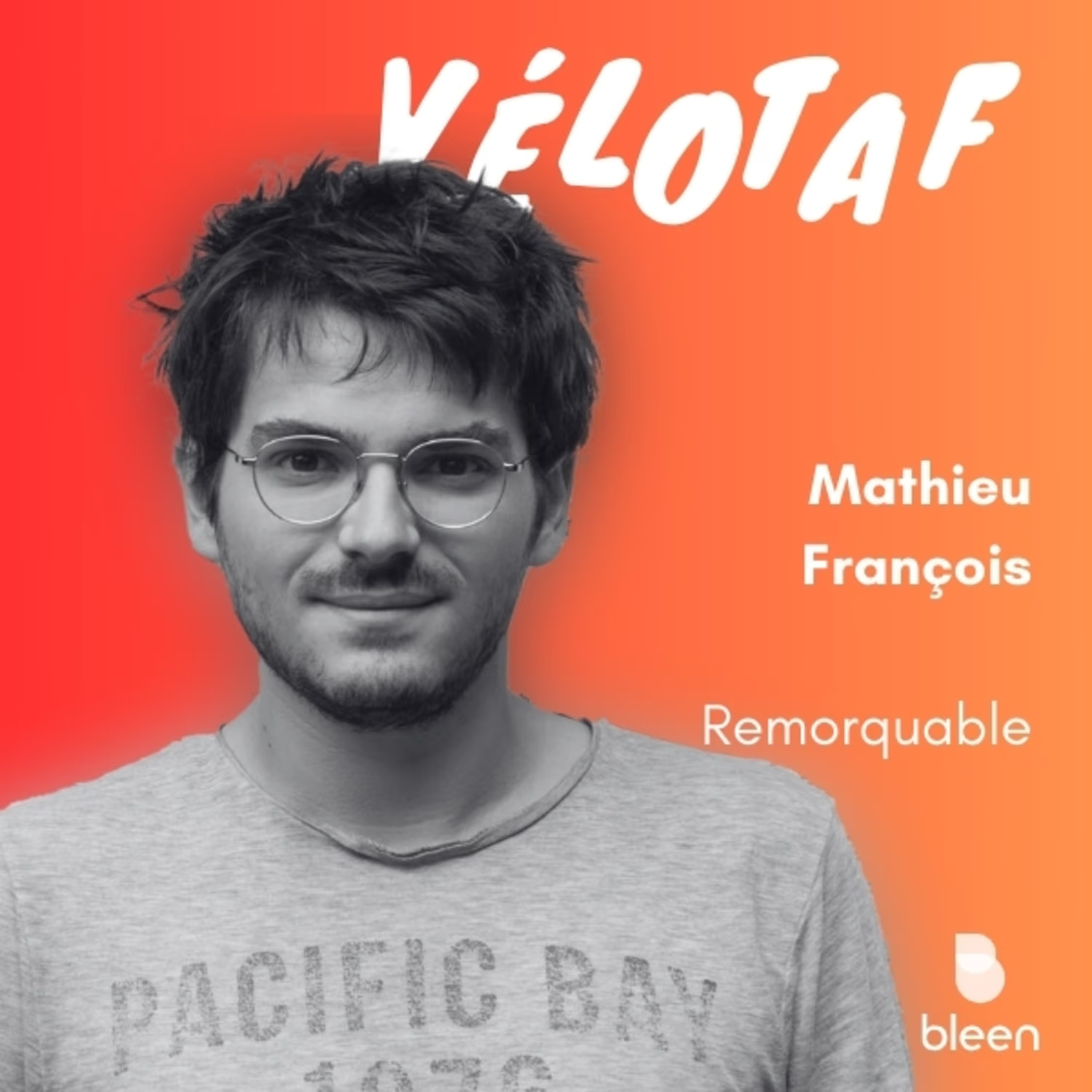
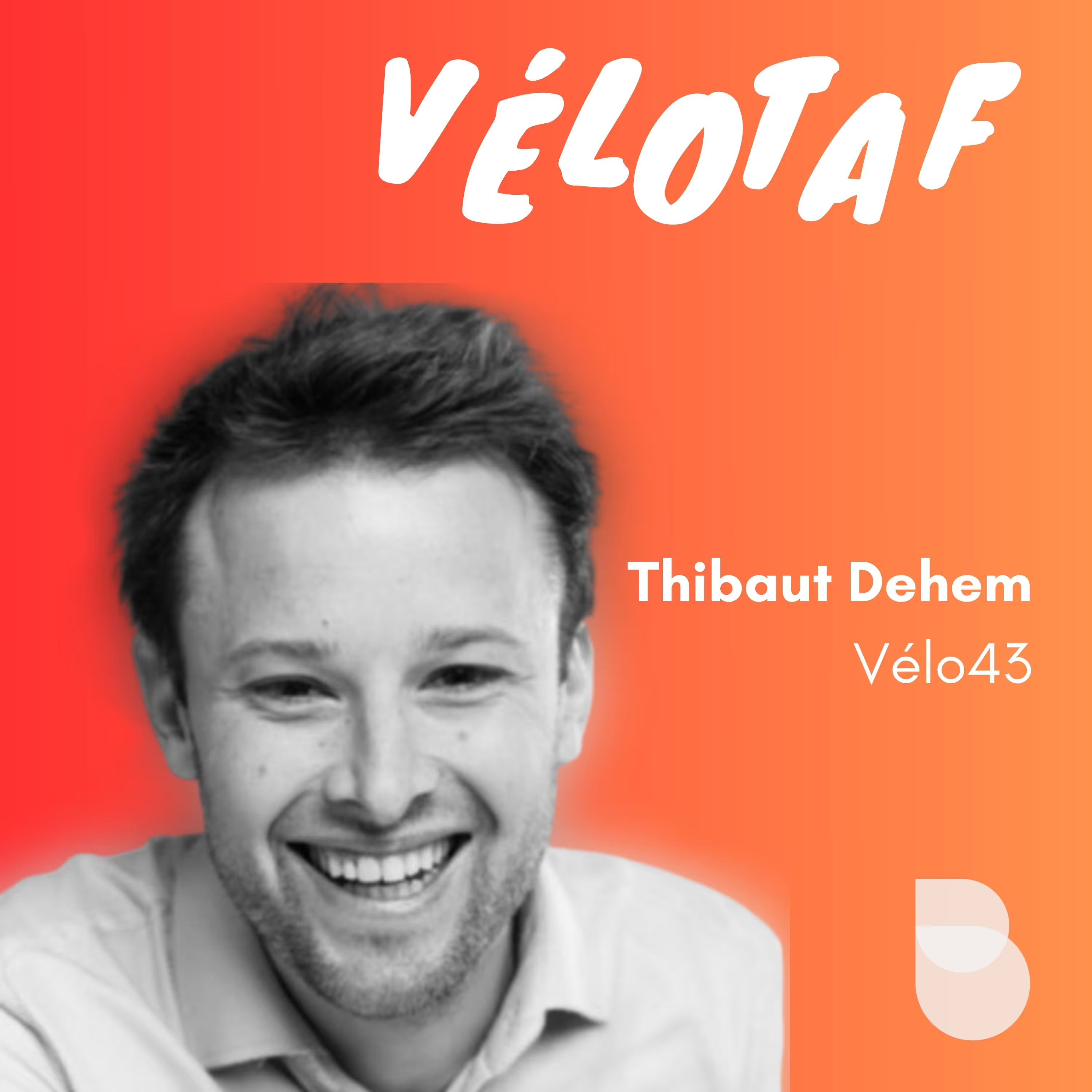
Thibaut Dehem is an entrepreneur from Brussels who took over Vélo43, a Belgian longtail cargo bike brand. His story illustrates a deeper trend: the longtail cargo bike for families is no longer a gadget, but a vehicle capable of replacing a car on a daily basis. Taking children to school, shopping, commuting to work: the longtail covers most of the urban journeys of a household with children.
“The cargo bike is really a moment of pleasure. We can chat on the bike, the girls play in the back, and we stop in front of the school gates. That feeling of freedom, goodwill and pleasure.”
Thibaut discovered Vélo43 while looking for a way to take his three daughters to school. His bike shop recommended this Belgian bike, designed by an engineer. Two days after buying it, he went back to the shop to meet the brand’s founders. A few months later, he took it over.
From 87 secondes to Vélo43: a bike entrepreneur
Before the cargo bike, Thibaut founded 87 secondes, a digital agency specialising in short, explainer videos. The agency grew to 80 people with offices in Brussels, Paris and Lyon, before being taken over by the French group DataWars. But bikes had always been part of Thibaut’s life. Right after finishing his studies, he set off on a nine-month round-the-world bike trip with a friend: 17,000 kilometres from Brussels through Africa, Latin America, China and the Silk Road.
“The bike is really the right pace for taking in the scenery. We’d brought tents. We kept track: there wasn’t one day in five when we slept in the tents, simply because people wanted to have us to stay.”
Total budget for the trip: under 3,000 euros per person for nine months. A basic steel bike at 1,000 euros, repairable anywhere in the world. This founding experience cemented a conviction: the bike is the most natural way to get around there is. Today, Thibaut is a dedicated bike commuter. When a cruciate ligament operation forced him back into a car for six months, he describes the experience as a punishment.
Vélo43: Belgian assembly and European ambition
Vélo43 (originally Bike43, for ‘bike for 3’, a bike for three people) is a longtail cargo bike brand designed in Belgium. The frames are made in Europe and assembly stays in Belgium, a rarity in the bike industry. The brand positions itself in the quality segment: Bosch motor, Enviolo transmission, durable components. The aim is to produce a bike you keep for a whole lifetime.
The company has five assemblers and is recruiting a workshop manager to quadruple production. The five-year ambition: to reach 5,000 to 10,000 bikes a year and launch a second, shorter model. Distribution goes exclusively through a network of dealers, a deliberate choice: the longtail cargo bike needs personalised advice, accessory fitting suited to each family’s set-up, and flawless after-sales service.
“Once it replaces a car, the after-sales service has to be flawless. We see dealers as very strong partners.”
The longtail cargo bike day to day: the family on two wheels
The longtail can carry up to three children on the back. Thibaut has been putting his one-year-old daughter on it since she was two months old, using a Maxi-Cosi adapter. He does recommend caution, though: babies in an infant car seat are better suited to short trips away from heavy traffic. On rainy days, Tucano Urbano covers keep the children warm and dry, removing the guilt of taking the bike out in bad weather.
Thibaut’s practical advice: invest in a sturdy kickstand that can bear the children’s weight even when they move about, fit a Quad Lock mount on the handlebars for the GPS, and organise the morning routine before bringing the bike out. Running a longtail cargo bike as a family takes a bit of logistics, but the gains in freedom and time more than make up for it.
“You think to yourself: oh blast, I’ve forgotten the little one’s nappies again, my backpack, the keys. So you have to go back inside.”
Brussels, Flanders and Wallonia’s cycling lag
Thibaut lives in Brussels, close to the Netherlands and Flanders, where cycling infrastructure is already well developed. In Wallonia and Brussels, the gap remains considerable. The Brussels region’s Good Move plan imposes a star-shaped traffic pattern that forces drivers back onto the ring road to get from one neighbourhood to another. Many see this measure as harsh, but necessary to speed up the transition.
For Thibaut, the main barrier is not the climate or the distance, but perception. Bike motorways already exist in part, the Ravel paths (routes running along old canals) offer good-quality cycling routes, but the general public does not know them. The vocabulary itself is lacking: in Dutch, talking about a bike motorway comes naturally; in French, the concept has not yet caught on. Promoting the longtail cargo bike as a genuine alternative to the car depends on product quality, the visibility of infrastructure and the gradual change of habits.