The episode in detail
From transport consulting to cargo bikes: a journey in stages
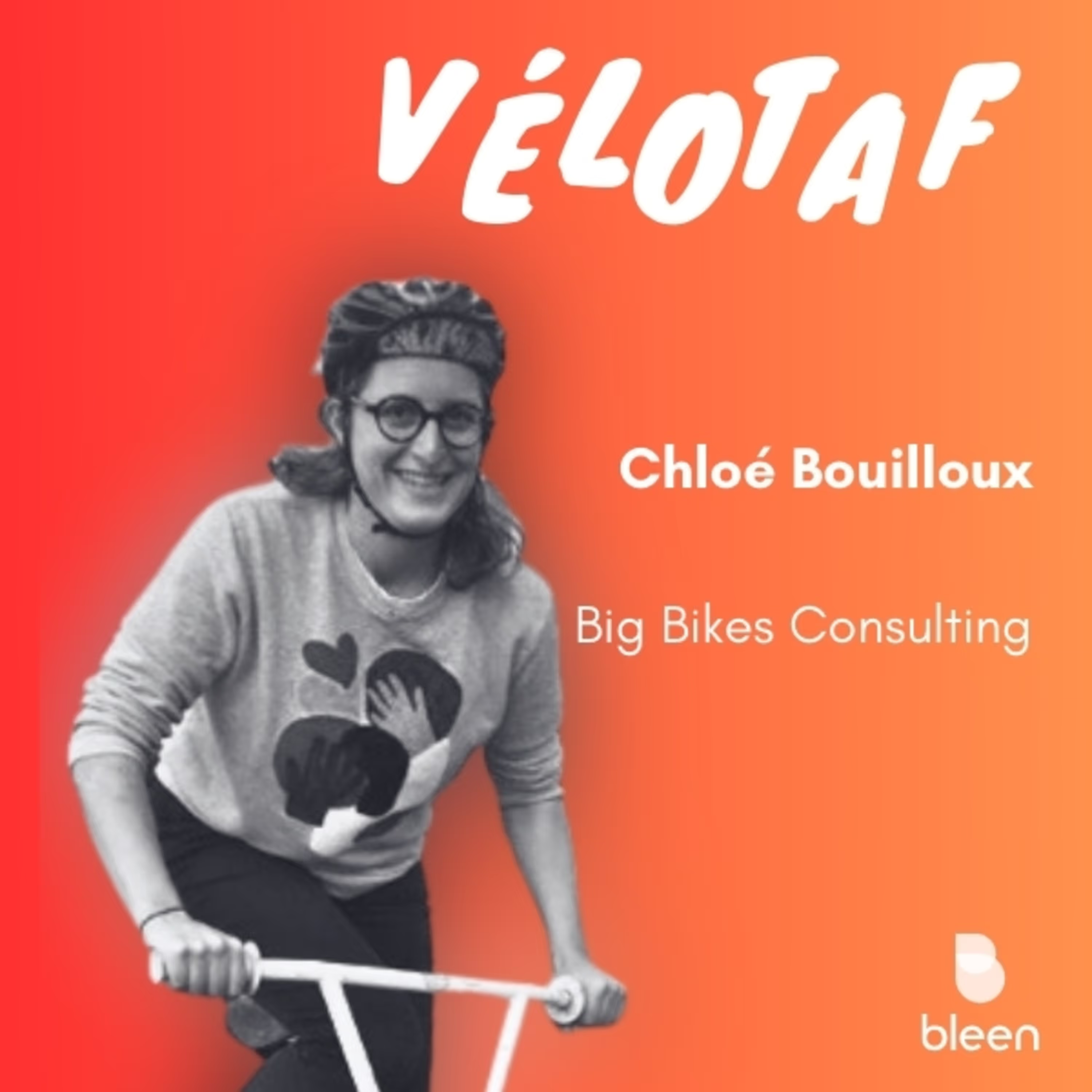
Professional cargo bike consulting is gaining ground in France, driven by people who combine strategic thinking with daily hands-on practice. Chloé Bouilloux embodies this hybrid approach. After four years at a transport and mobility consultancy, she felt the need to leave the office for the field. She joined a bike maintenance company in Paris, then discovered Cargonautes, a cycle logistics cooperative originally launched under the name Olvo. During lockdown, she helped launch an ordering platform as an alternative to the big delivery companies. The experience left its mark, but working two part-time jobs wore her out. She took a break, spent time at a cargo bike repair workshop with a mechanic named Nicolas, then returned to Cargonautes with a clear project: launching Big Bikes Consulting.
“It has always surprised me, people who do consulting, for example, who help people choose cargo bikes but don’t ride them. How can you advise clients if you’re not riding those bikes every day?”
Big Bikes Consulting: cargo bike consulting grounded in practice
Big Bikes Consulting was born at Cargonautes with a clear ambition: to offer cargo bike and cycle logistics consulting without commercial conflicts of interest. Unlike some retailers who mix consulting and sales, Chloé insists on keeping the two activities separate. When she organises test sessions for business clients, she reaches out to several brands and borrows or hires equipment to cover the full range available. Cargonautes sells equipment, but the consulting stays independent of stock considerations.
The visual identity, designed by graphic artists from Marseille, reflects a deliberate shift in tone: saying serious things with a light touch, in step with the alternative culture of the cycling world. The project is less than a year old, but assignments are already coming in one after another, thanks to Cargonautes’ network and reputation.
A range of assignments: from France Télévisions to the RATP
Big Bikes Consulting’s portfolio covers a wide range of work. Product testing for bike and component suppliers, building assessment frameworks and processing data. Feasibility studies for new cycle logistics projects in Paris. Supporting businesses that want to bring cargo bikes into their supply chain, with process analysis and change management.
Notable clients include France Télévisions, which asked Big Bikes to adapt cargo bike boxes for live filming during the Paris Olympics. The RATP called on their services to explore new uses. In Lyon, a partnership with Baguette à Bicyclette and their Transition à Bicyclette project lets the two respond to certain assignments as a pair.
“You realise you can’t change the practices of a large company’s logistics department by snapping your fingers, that you have to go step by step.”
The cargo bike market: no perfect bike
Chloé is blunt about the professional cargo bike market. The electric assist motor sector is still short on track record. Major players like Bosch or Shimano now offer motors made specifically for cargo bikes, but intensive professional use puts this equipment under strain. Breakages remain common.
On after-sales service, the picture is clear: Shimano and Bosch offer the best support in Europe. Brose remains niche, Yamaha is reliable but hard to find maintenance for. Bafang is restructuring its European after-sales network, with no tangible results yet. Integrated transmissions combined with motor drive also cause reliability issues.
“There’s no perfect cargo bike. Sometimes certain transmission models work better than others. There are going to be after-sales issues with certain Bafang motors.”
The total cost of ownership, including maintenance, is still underestimated by buyers. Some French brands sell bikes with assist kits that are impossible to maintain locally. For Chloé, that’s not a durable product.
Cargo bike advice: the criteria that really matter
To choose an e-bike or cargo bike, Chloé first looks at the motor brand and the quality of the after-sales network. Then the braking and transmission components. Design matters, but marketing shouldn’t take priority over maintainability. The UFC Que Choisir e-bike ranking, for example, leaves professionals puzzled about its methodology.
For business clients, field testing remains essential. Preconceived ideas often fall away after trials: companies arrive convinced they want tricycles and leave with two-wheeled cargo bikes, or the other way round. The right cargo bike depends on actual use, not brochures.
The future of cycle logistics: between constraints and paradoxes
Cycle logistics is growing, but its future depends on outside factors. The Paris Olympics paradox illustrates this well: fear of traffic jams pushed businesses towards cargo bikes beforehand. During the Games, the city emptied out, traffic flowed freely, and the hired cargo bikes stayed in the garage. In London, the congestion charge reduced the number of vehicles but made inner-city traffic flow more freely, undermining cycle logistics’ competitive edge.
“What allows cycle logistics to expand and be efficient is infrastructure and facilities, but also the fact that there are traffic jams.”
Without regulatory pressure (low-emission zones, restrictions on access to city centres), cycle logistics struggles to compete with vans in cities where traffic flows freely. Operational performance remains the main driver behind businesses switching over, ahead of corporate social responsibility.
Ethical cycle logistics: the cooperative model against precarity
Self-employed status, combined with piece-rate pay, makes the sector precarious. Some cycle logistics platforms rely on independent couriers who cover the cost of buying equipment, maintenance and storage themselves, without unemployment contributions or health cover. Some companies present themselves as employing staff on the surface while relying heavily on self-employed couriers.
For Chloé, the answer lies in regulation: tighter rules for self-employed status, a ban on piece-rate pay, and applying the presumption of employment status voted at European level. Cargonautes’ cooperative model (a SCOP) isn’t an end in itself, but it offers a framework where workers hold a share of the capital and take part in governance.
“A cooperative opens up a wide path to involve people. In physical, manual jobs, being able to say you sell your labour but also hold a share of the capital limits the exploitation side of things.”
The challenge remains getting couriers who work 100% in the field involved in cooperative life, while hybrid profiles or managers take part more. The physical strain of the job also creates different expectations for equipment: some look for physical effort, others want vehicles that minimise fatigue.