The episode in detail
From free fall to a professional reconversion into cycling
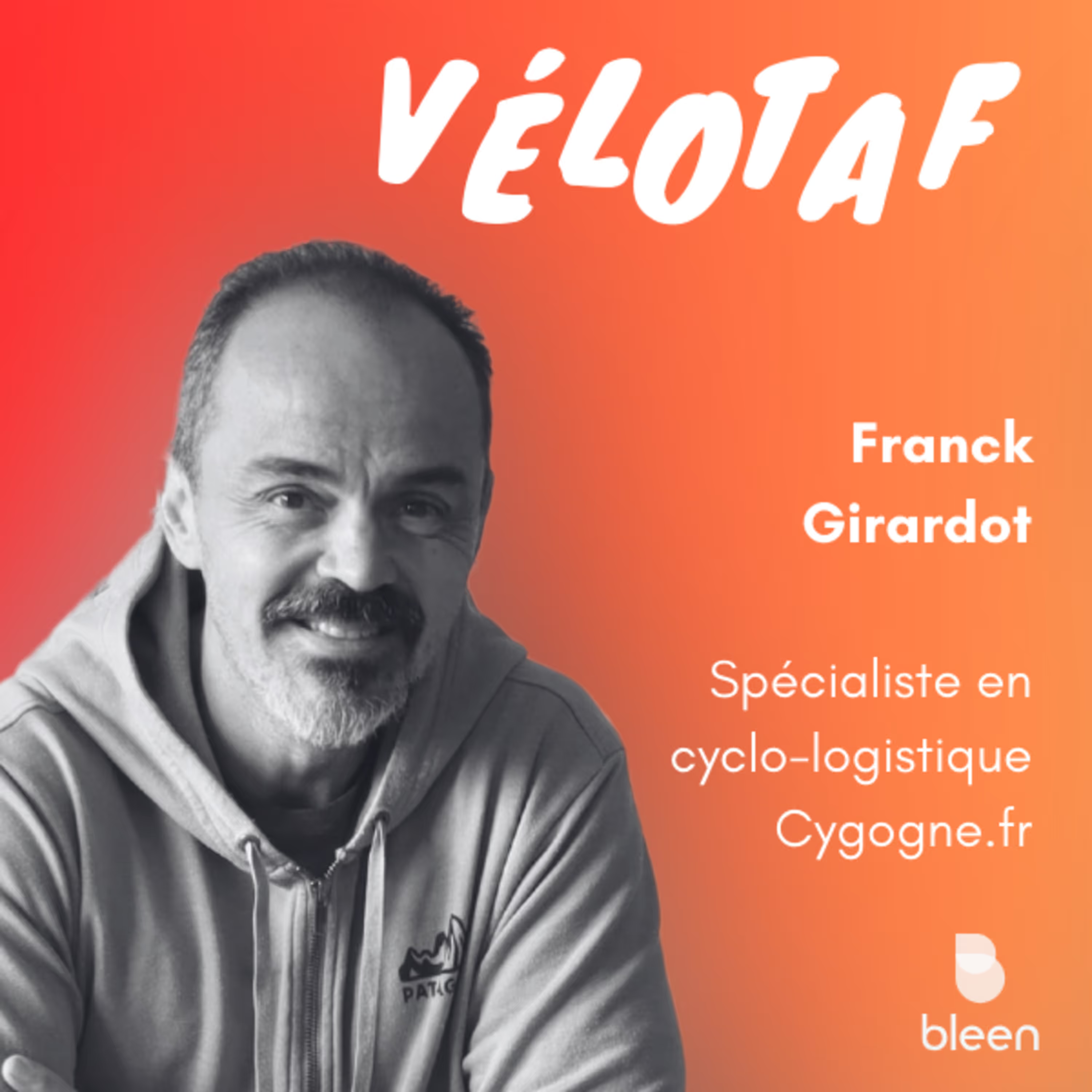
Franck Girardot’s path is nothing like a straightforward fairy tale. A former project manager, then entrepreneur, then strategy and marketing consultant, he went through a resounding bankruptcy on a property project in Bali worth 15 million euros and involving more than 200 people. Two prison stays followed, of five and ten months respectively. It was behind bars, during Covid, that the turning point came, prompted by television reports on cycling.
“In prison, I was watching reports about cycling and I thought: that’s what I want to do with my life.”
This professional reconversion into cycling is not a passing whim. Franck enrolled at the CNPC in Saint-Denis for training in bike mechanics, under the ADMA/ROSO scheme, led by trainer Bruno Bonnefoy. A radical, deliberate choice that meant starting again from zero.
The bamboo bike: a founding project
Before moving into cyclologistics, Franck took on building a bamboo bike with Thomas Mazurier of Vélos Brestois. The pair rode from Brest to Chartres on this handmade frame, a trip that firmly established the bike as the backbone of his new professional life.
“Building a bamboo bike means understanding the mechanics in your gut. You never look at a bike the same way again.”
LinkedIn as a springboard for reconversion
Starting with a professional network reduced to nothing after his setbacks, Franck used LinkedIn as his main tool for rebuilding. Regular posts, unfiltered sharing of his experience, targeted connections within the cycling ecosystem. The platform became his lever for becoming known in a field where he had no existing contacts.
Sygogne and cyclologistics in Paris
The reconversion became concrete when Franck joined Sygogne, a work-integration company specialising in cyclologistics in Paris, founded by Hugues de Cargorlais. The fleet has 12 bikes (six 12 Cycles G4 models and six V2 models) and eight Flexi-Modal runner trailers. The scale is modest, but the stakes are real: last-mile logistics, professional integration, daily maintenance.
“Cyclologistics is logistics first and foremost. The bike is a tool, not an end in itself.”
Franck takes a clear-eyed view of the sector. Cassettes, chains and chainrings are consumables that wear out fast under intensive professional use. Taking a bike out of service for maintenance directly affects profitability. The brands used, 12 Cycles, Cluster/Frigone, Vuf, Omnium and Flexi-Modal, are chosen for their sturdiness and how easily they can be repaired.
The end of purist cyclologistics
Franck doesn’t mince his words about the sector’s future. In his view, purist cyclologistics, the light front-loader ridden by enthusiasts, is reaching its limits. The trend points towards heavier vehicles: tricycles, more powerful motors, greater load capacity. He anticipates potentially 100,000 bike couriers by 2050, most of whom will not be committed cyclists but workers looking for a job.
“In ten years, the typical bike courier won’t be a cycling enthusiast. It’ll be someone looking for a job. And that’s fine.”
The cargo ecosystem taking shape
Over the course of the conversation, Franck maps out the sector: Les Cargonautes, Tout en Vélo in Rennes, Urbike in Brussels, Springer Heads, Narvelo. He mentions the Ma Cyclo-Entreprise programme run by Les Boîtes à Vélo, the Cargo Bike Festival in Lyon on Place Bellecour, and his own book “Vélo Cargo”, a crime novel set in the world of cyclologistics.
“The longtail is probably the fastest-growing product in urban cycling. It’s the credible alternative to a second car.”
The longtail stands out as the market’s most dynamic segment, positioned as a realistic alternative to the car for urban families. Many people in the sector share this view, seeing this format as the bridge between sporting use and daily transport.