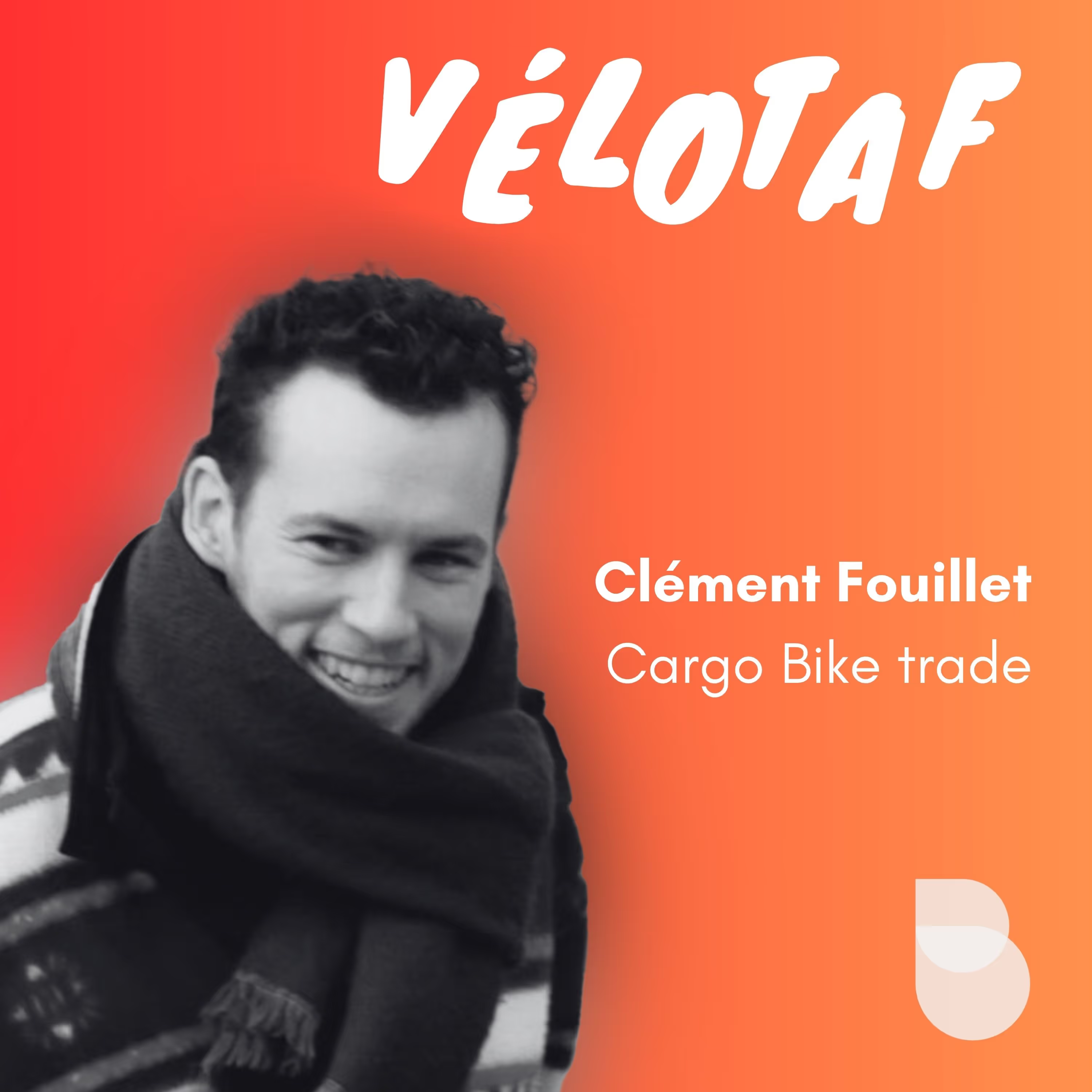
The episode in detail
Vélook: the guide to second-hand bikes since 2014
Finding a second-hand bike suited to your needs is far from straightforward when you don’t know anything about it. That’s the problem Léry Jicquel wanted to solve by creating Vélook (velook.fr) in 2014. The site brings together a directory of online second-hand bike platforms, a calendar of bike swap events across France, a quiz to identify the type of bike suited to your route, and interviews with entrepreneurs from the sector. Léry started out as a student, buying bikes in the countryside around Lyon to resell to his university classmates. The site attracts between 150,000 and 300,000 visitors a year depending on the season.
“The second-hand bike market is the best market in the world. That’s where you find the widest choice and the most affordable prices.”
Le Concentré Vélo: a newsletter for cycling culture
Alongside Vélook, Léry launched Le Concentré Vélo, a weekly newsletter sent out every Thursday. The idea: a press review of 10 articles selected from around a hundred spotted during the week. The editorial promise is clear: never the Tour de France, never competitive cycling. Le Concentré Vélo covers urban biking, bike commuting, cycling policy, the economics of the bike industry and soft mobility. The newsletter quickly caught the attention of an incubator, which supported Léry in developing the outlet.
“We will never talk about the Tour de France in this newsletter. It’s everything else, everything that exists around the bike.”
Bike commuting in New York: cycle tracks and two-wheeled culture
Based in New York, Léry notes the differences with Paris and Lyon. Manhattan and Brooklyn are lined with standalone cycle tracks along the waterfront, separated from cars and pedestrians. On the inner streets, the grid layout makes it easy to find cycling routes running parallel to the main avenues. New York drivers generally respect cyclists. The city hands out helmets to residents rather than piling on instructions. The one dark spot: electric bikes go over 30 km/h with no requirement to pedal, which creates dangerous situations on the cycle tracks.
“New York is probably the most European city in the United States. There are cycle tracks everywhere.”
The Observatoire des cyclistes accidentés de la route: documenting the tragedies
Léry also created the Observatoire des cyclistes accidentés de la route (the observatory of cyclists involved in road accidents), a database listing accidents reported in the media. A community of volunteers feeds the database. The findings are recurring: the accidents mostly affect older men in rural areas engaged in sporting cycling. Press articles remain poorly written, blaming the accident on the car rather than the driver. Prison sentences remain light. The observatory is a concrete advocacy tool for improving cyclist safety.
“A car ran over a cyclist: no, it’s a driver who ran over a cyclist.”
Why local elected officials are holding back the bike
Léry identifies two main barriers to the development of bike commuting in France. The first: the procrastination of local elected officials, who vote through ambitious bike plans but don’t dare let their own children cycle to secondary school. The second: endless preliminary studies that delay action. The Covid crisis showed that temporary cycle tracks could be created within weeks. The rise in petrol prices made bike plans drafted before 2020 obsolete. Léry argues for a pragmatic approach: test small, accept getting it wrong, then roll out.
“Thinking you need to know everything before launching anything is the biggest mistake public and private players make.”
Bike commuting day to day: practical tools and tips
For his trips, Léry uses Google Maps and Géovélo to plan his routes. He carries his laptop in a Sac à doche pannier, a hybrid model that converts into a backpack. His most original trick: a 120-decibel sound alarm, fixed under the saddle, triggered by remote control. The device costs about ten euros and does not stop at his own bike, it also protects every bike parked nearby. According to Léry, it’s more of a deterrent than any lock: a thief given away by a siren doesn’t have time to force a lock. His electric bike, parked outside in Vincennes, has never been stolen.