The episode in detail
A bike with eco-friendly materials: why the bike is not as green as people think
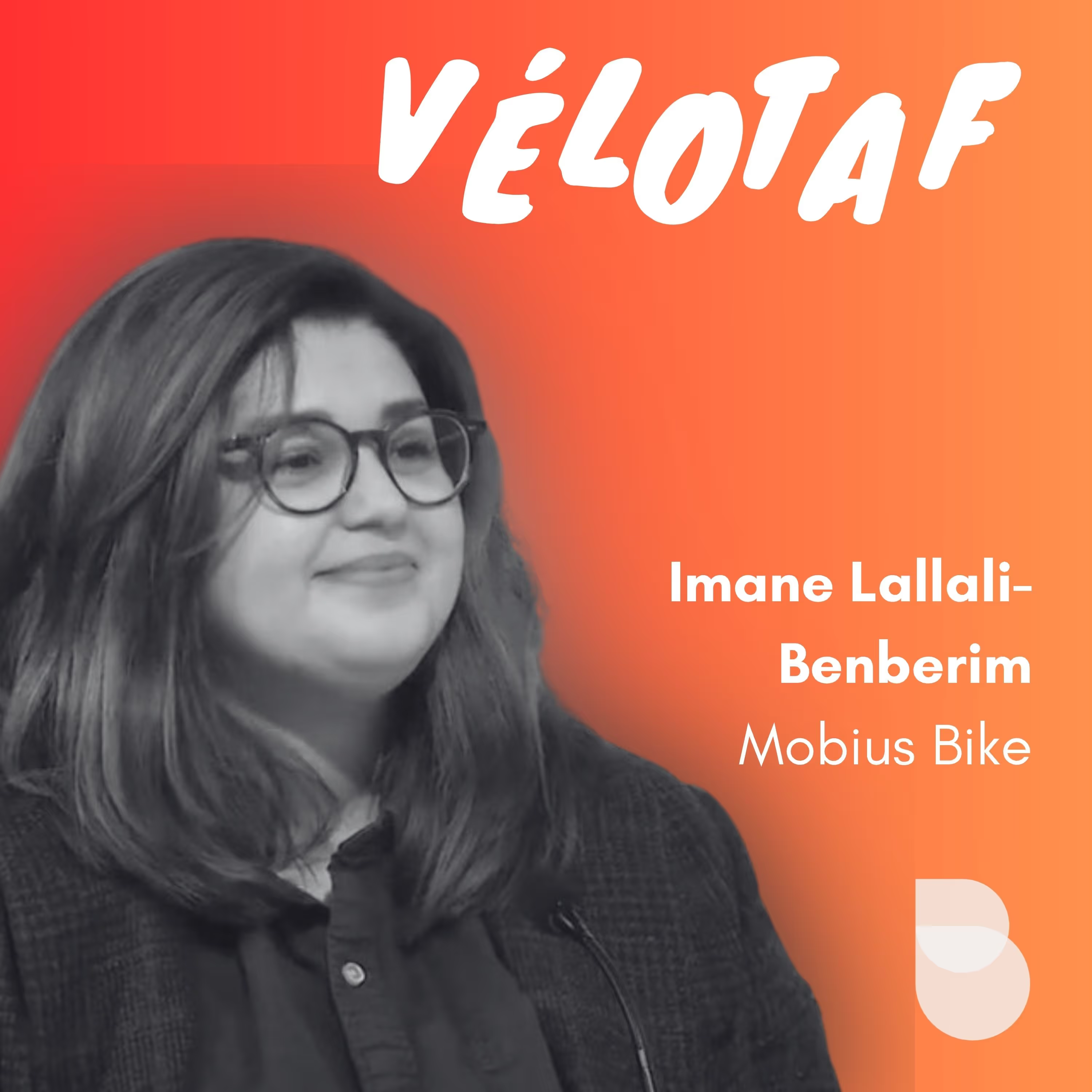
A bike with eco-friendly materials, that is Mobius Bike’s bet. Imane Lallali-Benberim, a mechanical engineer (Polytechnique Algérie, Mines de Paris, an Oxford MBA), founded this brand after making an observation: the bike is green in use but not in manufacturing. A bike is produced every 4 seconds worldwide from virgin materials. Aluminium, the main material used in frames, comes from bauxite mined under heavy environmental conditions.
Mobius Bike uses bamboo for the frame, grape leather (inspired by the eco-responsible fashion industry), and recycled aluminium. The idea did not come from the cycle industry but from fashion, where eco-responsibility efforts are further advanced. The Zèta brand and its grape-leather trainers directly inspired the choice of materials.
“The bike is green in use, but not necessarily across the product’s life cycle. A bike is produced every 4 seconds from virgin materials.”
From the oil industry to soft mobility: an engineer’s journey
Before founding Mobius Bike, Imane Lallali-Benberim spent fifteen years in the gas industry, designing liquefaction trains. She then worked in management consulting for the energy sector. Her environmental awakening came with parenthood: what air quality for her children? The 2020 lockdown sped up her move to action.
Her environmental convictions are not about degrowth. She argues instead for a change of indicators: replacing GDP alone with measures of well-being, air quality and health, as New Zealand has done. On a personal level, she acts on the three Vs: viande (meat, given up), vêtements (clothes, consumption cut), voiture (car, given up).
“Rather than putting all our indicators at half-mast, it would be about changing the indicators. And seeing those well-being indicators rise rather than being at half-mast.”
Three schools of thought in the bike industry: Mobius chooses the third way
Imane Lallali-Benberim identifies three schools of thought in the bike industry. The first, inherited from the car industry, pushes towards over-specification: more powerful motors, bigger batteries, ever-higher torque. The second, inspired by Apple, bets on hyperconnectivity and slick design, but often imposes a paid app and dependency on a smartphone.
Mobius Bike positions itself on a third path, inspired by eco-responsible fashion. The bike is designed for the everyday bike commuter, not for the athlete. The bamboo frame, grape leather and recycled aluminium cut the manufacturing footprint. The business model relies on direct sales (the mobius.bike site and Nature & Découvertes) to keep a competitive price despite the higher cost of eco-friendly materials.
Imane sees in the industry a school of thought inherited from the car industry, that of over-specification: more torque, more powerful motors, bigger batteries.
“I am not convinced that this trend towards over-specification has a positive impact on the planet.”
Recycling and the circular economy: Mobius’s long-term vision
Mobius Bike builds the product’s end of life into the design stage. The brand pays a fee per bike sold to the eco-organisations Corepile and Ecologic for recycling batteries and components. Thinking is also under way on upcycling certain parts and on smart dismantling, even though these projects are long-term.
The company gives 1% of its revenue to the NGO 1% for the Planet and takes part in reforestation via Ecotri. Incubation at Arts et Métiers backs its R&D with a frugal approach. Every euro is optimised, in line with the brand’s values of restraint. An eco-responsible cargo bike is under study, even though bamboo brings load constraints greater than those of a standard bike.
“Every euro has to work as if it were a thousand. We don’t have a choice, but frugality and restraint are part of our values.”
Diversity, inclusion and accessibility: breaking the image of the bike for experts
Imane Lallali-Benberim also speaks out on diversity in the cycle industry. The only woman in her mechanical engineering class at Polytechnique Algérie, she notes that the bike world remains very male-dominated. At Eurobike, the largest cycle trade show in Europe, she was asked where she was from when she introduced herself as a French founder.
Mobius’s ambition is to make the bike accessible to everyone, beyond the image of a product for adventurers or sport cyclists. The brand’s communication goes beyond the bike: advice on eco-responsible eating, waste reduction, a lifestyle of restraint. The long-term vision: to become the leader in eco-responsible soft mobility for the whole family.
“We’re trying to break this image of the bike being for the pros, a bit for men. We want to make the bike accessible to everyone, fun and cool.”