The episode in detail
Bike commuting as an environmental commitment: the climate wake-up call
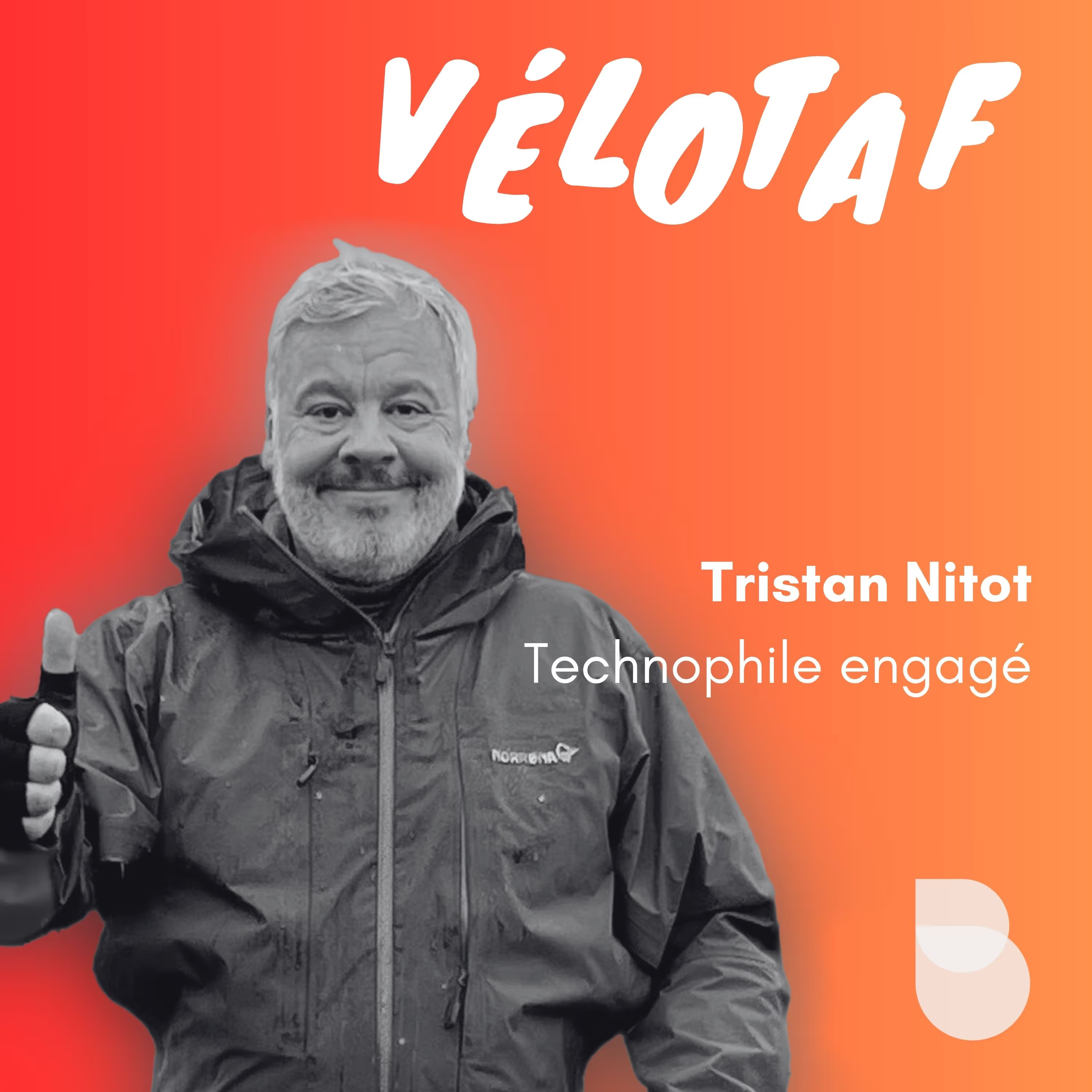
Bike commuting as an environmental commitment is the story of Tristan Nitot’s journey. A figure in French tech, a Netscape and Mozilla veteran of 17 years, now head of sustainable development at Scaleway, he explains in this episode how Nicolas Hulot’s resignation in 2018 triggered his wake-up call. At the time he rode a scooter and a motorbike around Paris, owning up to seven motorbikes at once. He sold one motorbike, bought an e-bike, and never looked back.
The maths are simple. The average French person emits 10 tonnes of CO2 a year. The target for 2050: 2 tonnes. The leading source of emissions in an individual’s footprint is motorised transport. The bike can cut that share significantly, replacing thousands of kilometres a year spent on a motorised two-wheeler or in a car.
“I’d imagined that by putting a well-known, media-savvy, sincere bloke in charge, we’d solve the problem of climate change. And the bloke tells you live on the radio: I’m leaving.”
From an obese motorcyclist to a daily bike commuter: the practical benefits
Tristan Nitot hides nothing about his starting point. Overweight and sedentary, he walked 20 metres a day, between his home and his scooter, then between his scooter and his office. The switch to the metro first, then to the bike, transformed his physical health. The weight loss was gradual but steady.
His equipment changed as his riding evolved. An e-bike at first, to get up Chaillot hill without arriving drenched at meetings at the Senate or with clients. Then a pedal bike, a steel touring bike, once his route became flat along the Seine. Two Bromptons for zero-carbon weekends on the TGV with his wife. The accessory he recommends above all: a foot pump with a pressure gauge, to keep tyres at the right pressure and avoid pinch flats.
“80% of journeys are under 5 kilometres. And 5 kilometres by bike is peanuts.”
The bike at work: leading by example and internal culture
At Scaleway, Tristan Nitot champions bike commuting in a professional capacity. The company already has a sustainable mobility allowance. The bike parking is regularly full. By his second day, he had been signed up, without being asked, to the company’s internal bike commuting channel. Leading by example works: his wife took up bike commuting six months after him, without him needing to push her.
His three policy proposals remain relevant today: enforcing the highway code for all road users (cyclists included), putting 20% of road budgets into cycling infrastructure, and making the sustainable mobility allowance compulsory for every employer. With 500 euros a year, an employee can buy a quality bike every four years and get kitted out for the rain.
“The price of one kilometre of urban motorway funds hundreds of kilometres of cycle tracks. It’s not that there’s a lack of money, it’s that it isn’t being directed to the right place.”
The critical mass: how mindsets are changing
Over four years, Tristan Nitot has seen a real change in Paris. The temporary cycle lanes set up during Covid have become permanent. The number of cyclists has reached a critical mass that is changing how drivers behave. The motorised two-wheelers that used to encroach on cycle tracks have gone. In Normandy too, the supermarket bike racks, once empty, now fill up outside the summer season.
The main barrier remains infrastructure. As long as local councils do not build safe cycle tracks, part of the population will not dare to start. But where the facilities exist and the terrain is not too steep, the switch happens quickly. The e-bike now removes the excuse of hilly terrain.
“Almost everyone is capable of riding a bike. There are adapted bikes, assisted bikes, assisted tricycles, cargo bikes. The range is much wider than people think.”
The bike as a driver of positive environmental transition
What sets the bike apart from other climate actions, according to Tristan Nitot, is that it is not experienced as a deprivation. Eating less meat, giving up flying: these choices feel like sacrifices. The bike, by contrast, brings pleasure. The freedom to stop and photograph a sunrise over the lakes in the Bois de Boulogne on the way to work. Less stress thanks to 25 minutes of exercise morning and evening. Weight management without dieting.
Tristan Nitot also hosts l’Octet Vert, a podcast at the intersection of tech and climate. His approach is that of an evangelist in the American sense of the word: sharing his passions selflessly, making the transition appealing. Bike commuting is not a sacrifice made for the planet. It is a way of life that genuinely improves the daily life of whoever takes it up.
“The bike, when you get on it, gives you a joy that means it isn’t a deprivation. It’s a really nice, really positive way to cut your carbon footprint.”