The episode in detail
Sustainable cycling textiles versus big-brand marketing
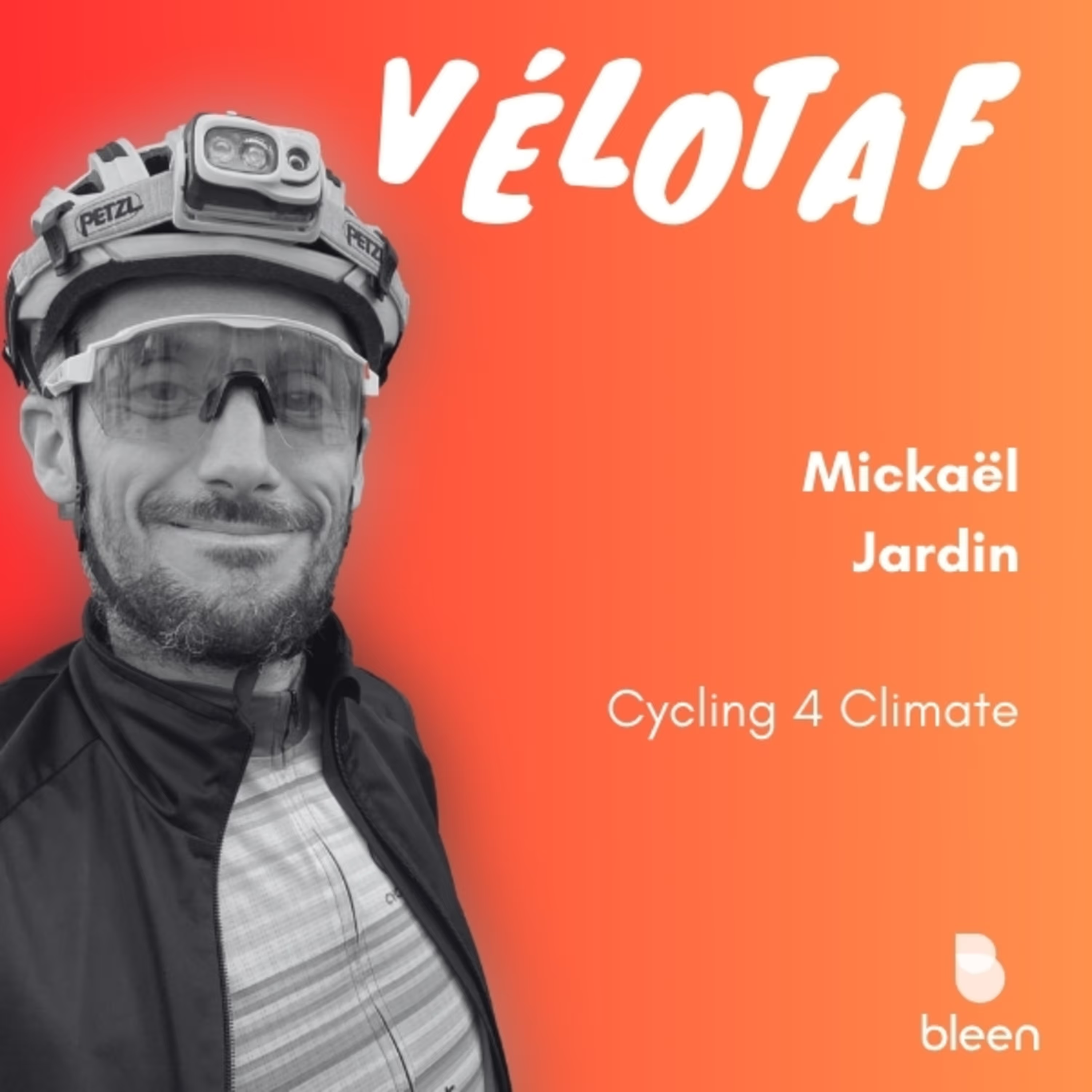
Mickaël Jardin is co-founder of Vélor, an eco-responsible cycling clothing brand set up three years ago with his brother. A cyclist for 25 years, he built Vélor around one conviction: producing technical clothing on a par with market leaders, but with impeccable traceability and materials that are 100% European and recycled.
The cycling textile sector is dominated by brands that invest heavily in marketing. Jerseys cost €30 to €40 to make and sell for €200. The raw material is oil-based polyester, manufactured in Asia. Vélor takes the opposite approach: recycled materials, European production, reduced margins to stay affordable.
“If you make a garment that’s great from an eco-responsibility standpoint but price it so nobody can afford it, in the end you’ll have no impact at all.”
Material traceability: the real challenge of sustainable cycling textiles
Many brands advertise recycled materials without guaranteeing traceability. Mickaël describes the reality: when you ask where the waste comes from, who extruded the yarn, which factory the materials passed through, most suppliers shut down. Vélor had to change raw material several times because the supply chain was too opaque.
The team built its credibility over three years. As volumes have grown, suppliers are starting to accept transparency. For jackets, waste is collected from the Mediterranean and processed between Italy and Spain. Vélor talks directly to every link in the chain.
A Dutch magazine called Vélor the smallest brand on the market with the most ambitious eco-responsibility projects. The team grew in the Netherlands thanks to a local awareness that is more advanced on these issues.
“When you ask where the waste comes from, who worked it, it turns into a fog. We had to change material because it was too unclear to be honest.”
Circular economy: worn jerseys become new jerseys again
Vélor has just completed a proof of concept for a circular economy applied to cycling textiles. The previous year, 300 jerseys were collected during the Cyclo pour le Climat event in the Netherlands. These jerseys were shredded in Italy, re-extruded into yarn, turned into fabric, cut and sewn back together. The first jerseys from this process match the quality of the originals.
The process is complex. A cycling jersey is not simple mono-polyester: it contains elastane, elastic bands, zips. For recycling to work at industrial scale, the product needs to be designed from the outset with its end of life in mind. Vélor did this from its very first jerseys: YKK zips in polyester rather than steel, near mono-material composition to make shredding easier.
The goal is full industrialisation by around 2026-2027, in partnership with Dutch companies that collect old clothing currently destined for incineration.
“The way you design a jersey at the start of its life shapes what it becomes at the end of it.”
Affordable prices and reduced margins: a strategic choice
Vélor refuses to keep sustainable cycling textiles for a well-off niche. The strategy is clear: push the eco-responsibility dial as far as possible while staying affordable. If lowering that dial by 5% reaches thousands of people instead of ten, the overall impact is greater.
Recycled material costs a few euros more per linear metre than virgin oil-based polyester. Vélor compensates by cutting its margins and building up pre-orders. The customer accepts a wait of 3 to 5 weeks and pays 20% less. The model removes dead stock, an absurdity in a market where thousands of garments are made and then incinerated within days for lack of sales.
A former professional cyclist (13 years’ career, Tour de France, major classics) tests every product before it goes on sale. The technical quality matches the brands he raced with. A Vélor jersey lasts 3 to 5 seasons.
“If you sell the most eco-responsible product on the market but only sell ten a year, that’s a bit daft.”
Leading the sector: shifting the lines in cycling textiles
Mickaël is not necessarily aiming for the size of the market’s giants. The ambition is to lead the way: showing that full eco-design is viable, that circularity works at industrial scale, and that margins do not need to be indecent to run a business.
The message to consumers is direct: ask brands questions. If a product’s origin is not disclosed, the manufacturer is not proud of it. Sending an email takes five minutes. Most eco-responsible alternatives exist, but they do not spend millions on search rankings. You have to look for them.
Vélor already equips clubs in the Netherlands and Brittany. The price gap with conventional brands is limited to €2-3 per item. For Mickaël, that is the price of responsibility, and most buyers are willing to pay it once the approach is explained to them.
“Every Vélor jersey sold instead of one from another brand is good for the planet. It would be a mistake not to make the most of that.”