The episode in detail
From communications to bike mechanics: a career change that makes sense
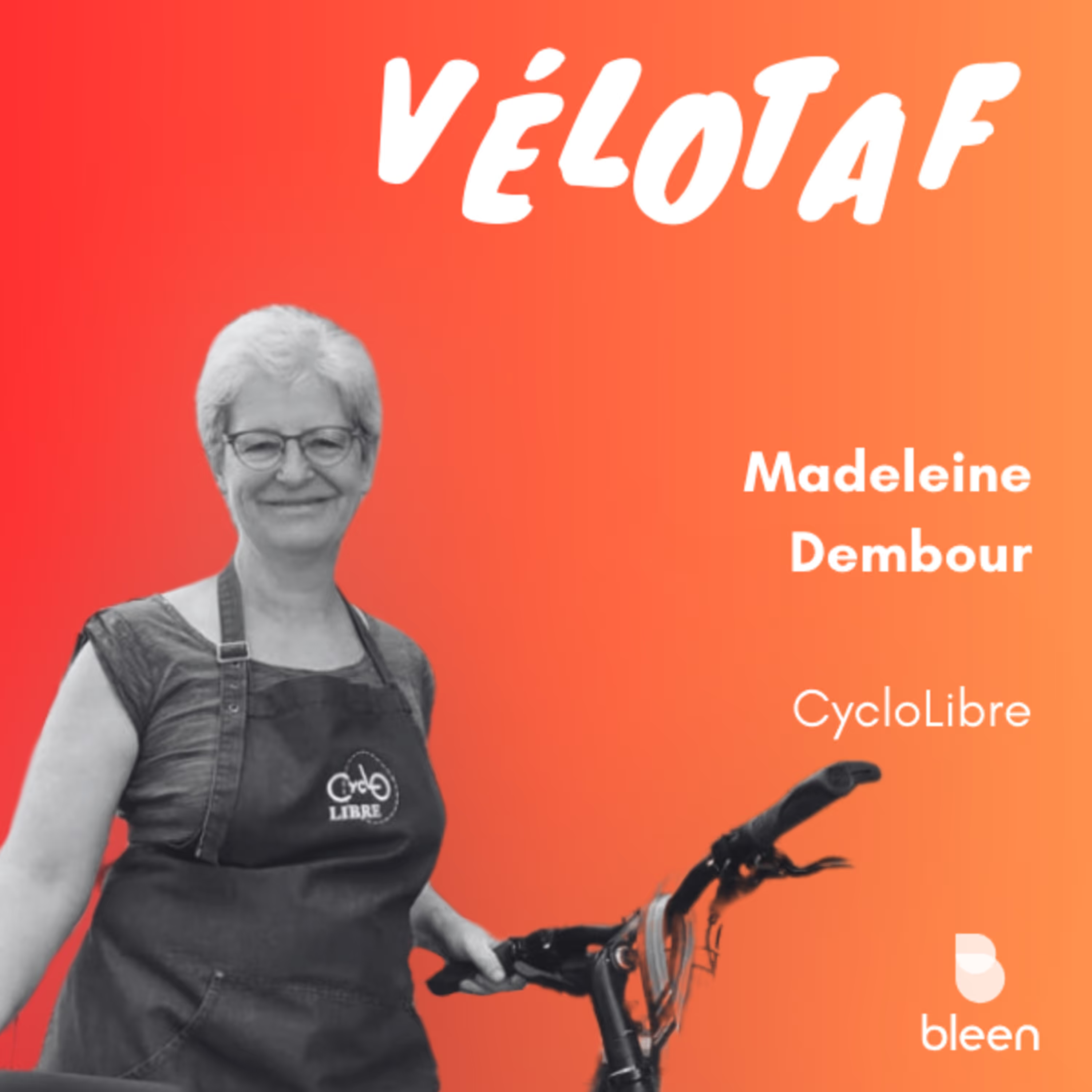
Career changes into the cycling world remain rare, but increasingly visible. Madeleine Dembour is part of this movement. After years in communications (copywriting, public relations, project management), she felt a growing mismatch between her daily work and what she was looking for. The information she produced became outdated within hours, sometimes within seconds. The sense of taking part in something concrete was fading.
The turning point came in 2018 when a friend working at IFAPME (the Walloon training institute for the self-employed and SMEs) told her about the courses on offer. One of them was bike mechanics training. “He told me: the bike workshop really works well. That’s when it clicked,” she recalls. Madeleine enrolled for two years of evening classes, two evenings a week, plus 300 hours of workshop placement. She spent her Fridays on hands-on practice.
This path illustrates a reality that’s often underestimated: in Wallonia, professional bike repair requires official access to the trade. IFAPME training provides this qualification. Madeleine isn’t just learning to change an inner tube: she is acquiring the technical and administrative skills needed to work legally.
From home garage to professional workshop: the role of Covid
The second year of training coincided with the arrival of Covid. Everything stopped: placements, classes, communications projects. Rather than sit through the wait, Madeleine turned her garage into a bike workshop. She bought tools, practised on her own bikes, then let her neighbours know through a WhatsApp group that she could repair theirs.
“Word of mouth spread very quickly,” she recalls. The Friday she used to spend on an external placement became a day of repairs at home. The work soon outgrew its original scope. Behind every repair lies invisible work: ordering parts, negotiating with suppliers, obtaining approvals. Friday was no longer enough. She opened on Wednesdays too, then the days in between. The bike work overtook the communications work.
This period reveals something many bike entrepreneurs share: the repair trade isn’t just about technical skill. Stock management, sourcing reliable suppliers and admin work take up a considerable share of the time. Madeleine finds that her skills in communications and project management, far from being useless, become a major asset in structuring her business.
Finding the right premises in Liège: a precise set of requirements
The search for the ideal premises involved Madeleine and her husband Guy, an architect by training. The requirements were clear: a location in the flat part of Liège (a city of 200,000 people crossed by the Meuse and surrounded by hills), close to the RAVeL (the slow-traffic path that runs along the river), accessible by car for dropping off bikes, and set in a lively neighbourhood.
“We didn’t want to end up somewhere dead, in a business park that’s empty at night and at weekends,” explains Madeleine. The couple viewed a series of unlikely places: a former funeral home on a hill, a joinery, a brewery, and a former bank whose vault room had charm but whose one-way street made access impossible.
In the end, a former car garage fit the bill. Guy spotted it while cycling around: he picks his architecture projects by one simple criterion, that they’re accessible by bike. After negotiations with the owner, the couple bought the building and converted it in six months. Showroom at the entrance, workshop in a mezzanine behind a large glass wall, storage at the back. CycloLibre opened its doors in September 2022.
A business model between social service and profitability
The question of profitability for an urban bike workshop inevitably comes up. Walk-in repairs (punctures, brake adjustments, small fixes) aren’t enough to run a business with two employees. CycloLibre built its balance on three pillars: repair, sales and hire.
The customer base is deliberately wide. On one side, delivery riders, most of whose employers don’t provide the bike, arrive with basic machines, sometimes borderline on safety. “These are people you can’t charge too much for a repair,” Madeleine acknowledges. On the other side, cyclists with quality bikes who come in for regular servicing: drivetrain replacements, hydraulic brake bleeds.
This wide range is a deliberate choice. “I stand by being able to take on any customer,” Madeleine states. Many bike shops refuse to repair bikes they haven’t sold themselves, or set up on the outskirts, out of reach for everyday urban cyclists. CycloLibre fills that gap.
A bike workshop manager’s day: far from the grease
Madeleine now employs a full-time mechanic and an apprentice. She herself barely touches the bikes anymore. Her day as a manager looks more like that of a small business owner than a mechanic.
From 10am to midday, before opening to the public, she organises the day’s work: checking on repairs in progress, making sure the necessary parts are in stock, and splitting tasks between the two mechanics. This is also when parcels arrive (“in a bike shop, you’re constantly ordering parts”) and appointments get managed.
From midday, the flow of customers doesn’t stop. Taking in bikes, quick diagnosis of problems, quotes, purchase advice, hire management. “It happens fairly often that I don’t even have time to eat. It’s 4pm, 5pm, and I realise: oh, I haven’t eaten,” she admits. After closing at 6pm, the work continues: stocktaking, orders, bookkeeping, and admin for the two employees.
Inclusive bike repair: an urban mobility issue in Liège
CycloLibre’s choice to accept every bike and every budget goes beyond simple business strategy. It responds to a concrete urban mobility issue. In a city like Liège, where the terrain makes cycling more demanding than elsewhere, access to an affordable, central repair workshop can make the difference between a cyclist who keeps riding and a bike that ends up at the back of a garage.
Madeleine also notes a diagnostic aspect that many overlook: knowing how to tell someone that a repair isn’t worth it. “We get bikes bought for 50 euros at a flea market that need 300 euros of repairs. Is it worth it?” That honest advice is part of the service, and it’s what builds trust with a local, regular clientele.
CycloLibre’s story shows that an urban bike workshop is not just a business: it’s a link in a city’s cycling infrastructure, just like a cycle track or secure parking.