The episode in detail
Happy Shifter: one month to try cycling to work
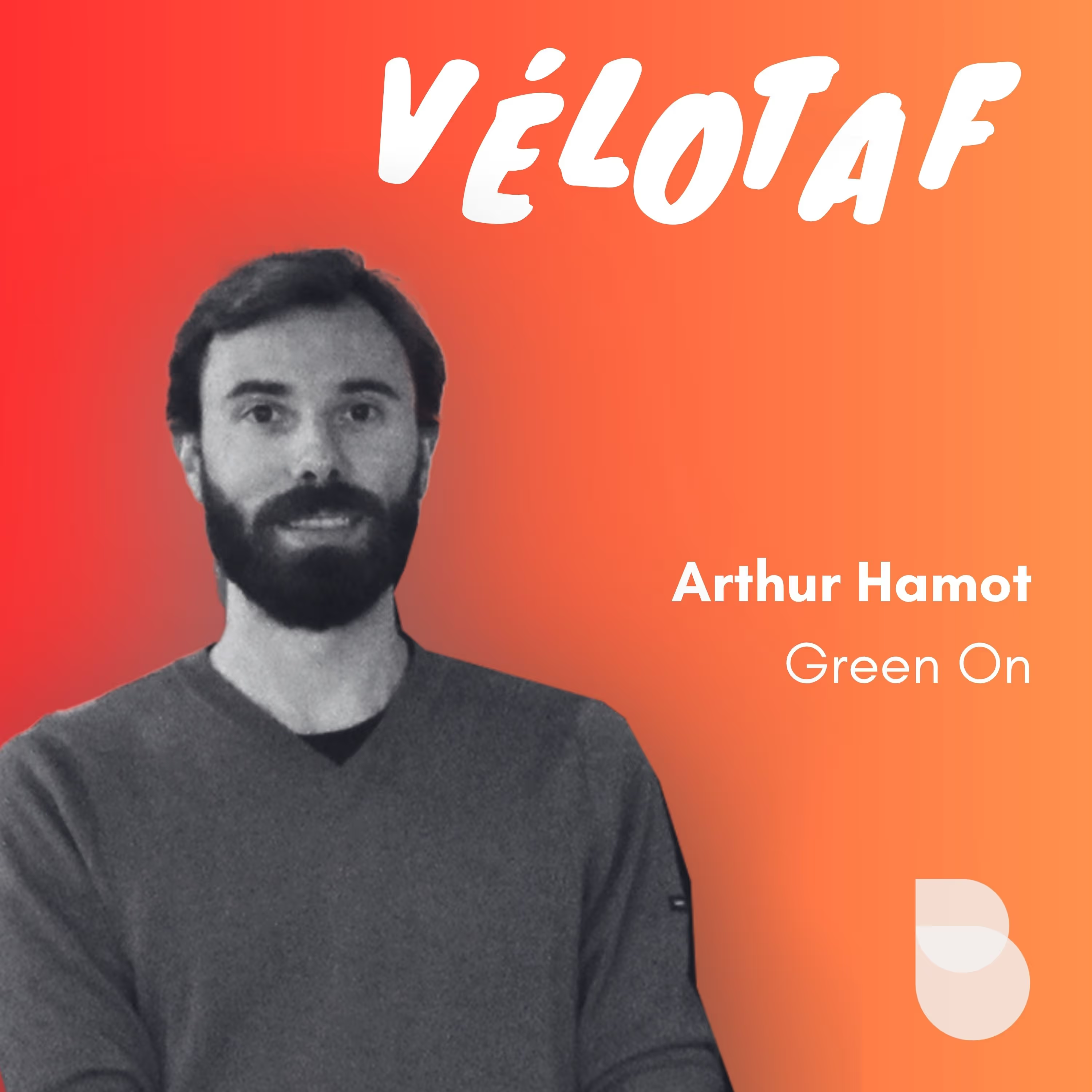
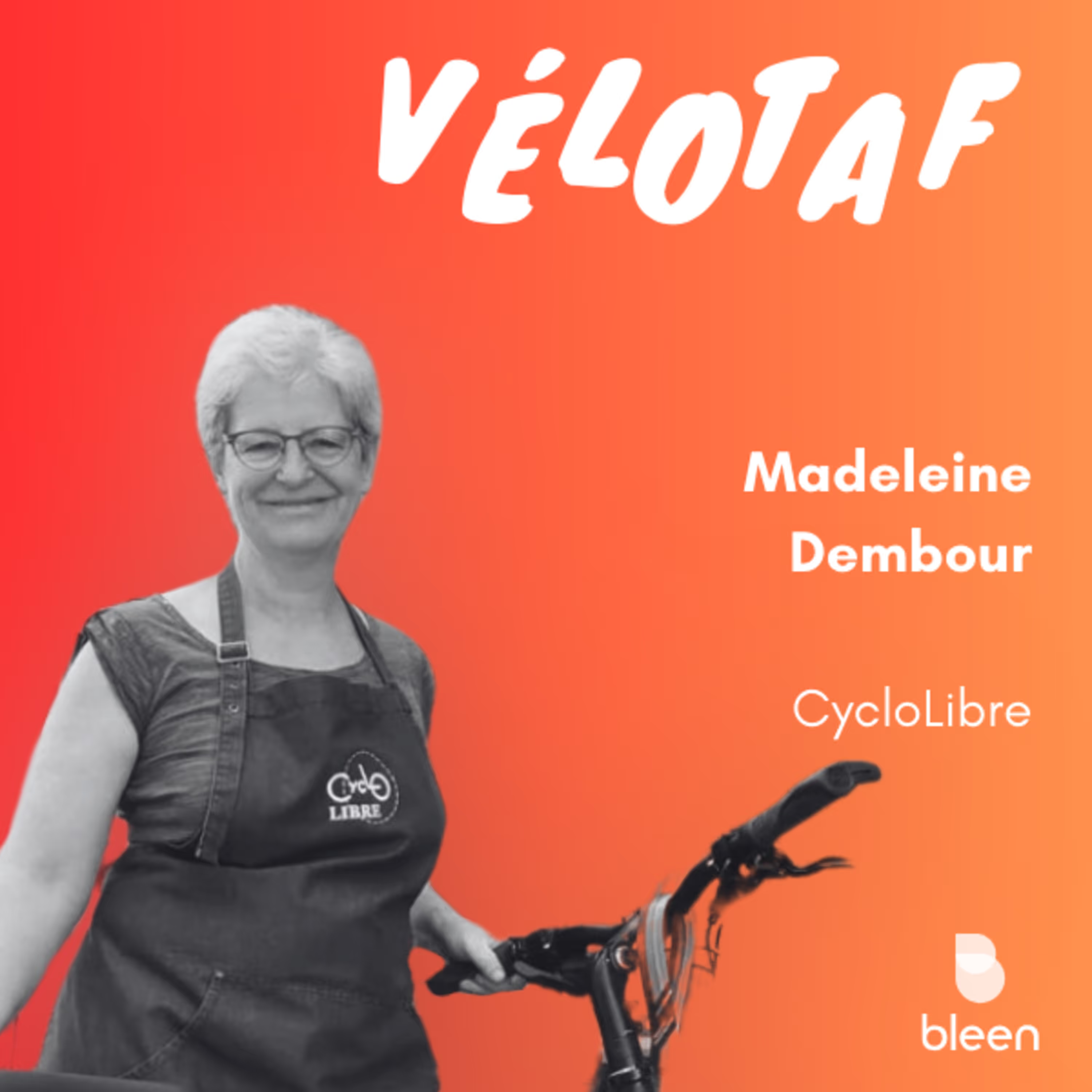
Happy Shifter grew out of a Belgian federal call for projects launched by the SPF Mobilité et Transports, the federal public service for mobility and transport, under the name “Shift Your Mobility”. The idea: groups of 5 to 10 colleagues test electric bikes for a month for their commutes. The project, run by Madeleine Dembour from her CycloLibre workshop in Liège, targets employees who live a few kilometres from work and have never considered cycling as an option.
“The lever we want to use isn’t just that it’s good for the planet or your health. We want to convince people that they can find pleasure and joy in it.”
Equipment, training and routes: a turnkey solution
The project isn’t limited to lending a bike. Each participant receives a full kit: helmet, panniers, rain trousers, phone mount, child seat if needed. At the start of each session, urban cycling training helps beginners build confidence in traffic. The team also helps map out alternative routes, since most participants are drivers and only picture the route they’d take by car.
“People imagine that the bike route is the same as the car route. They think: it’s impossible. Our role is to show them alternative routes better suited to cycling.”
An app rounds out the scheme: peloton members share tips and photos, with light-touch emulation, not competition, and small rewards linked to how often they cycle.
50% of trips under 5 km made by car: the potential for bike commuting in Belgium
Figures from the SPF Mobilité et Transports frame the issue: in Belgium, 50% of commutes under 5 km are made by car. For commutes under 15 km, that figure rises to 67%. The potential for modal shift is huge, particularly in a city like Liège, which is very hilly and historically built for cars.
The project runs from September to June, with a break in December and January: there’s little point putting sceptics on a saddle in freezing weather. The back-to-school months, September and October, boosted by Mobility Week, see the most demand. End-of-month evaluations show that the barriers identified before the test fall away one by one. The recurring barrier: the place of cars in cities, which still frightens people.
The cycling ambassador: the company’s key role in modal shift
Each peloton needs an internal ambassador: a motivated employee who recruits colleagues. Without this person, the project doesn’t get off the ground. Reluctant companies always make the same argument: everyone who could cycle to work already does.
“We run a survey and suddenly, lots of people come forward. They say: on my own, I feel a bit lost. But under these conditions, I’m interested.”
Some organisations remain stuck in a twentieth-century mindset: “cycling is impossible” for 4 to 5 km trips that employees make daily by car on urban motorways. For many companies, though, a turnkey project meets a wish they didn’t know how to act on.
Bike mechanic training: a sector under strain
Madeleine sees a growing gap between the supply of bike mechanic training courses and actual job openings. Qualifying courses, evening classes, secondary school tracks: providers keep multiplying, but quality placements are scarce. The seasonal nature of the trade makes it worse: workshops take on trainees in high season, April to June, and none in winter.
“Are these trainees treated as cheap labour, or do we genuinely want to teach them a trade? It’s a subject worth discussing.”
Training providers also struggle to find qualified instructors. Coordination between training bodies is needed to avoid saturating a market that’s still young.
Cycling grant in Wallonia: a little-known aid at risk of disappearing
The Walloon grant for buying a bike, in force until 31 December 2024, hasn’t been renewed. The same trend can be seen in France, where cycling grants are also being questioned. The official argument: the grant is underused, so it’s not needed. Madeleine points to a vicious circle: the grant is underused because it’s little known.
“Many of our customers are completely unaware of it. I have bike shop colleagues who didn’t know it existed. Was it not used because it wasn’t known about?”