The episode in detail
From WMNride to the Casual Cycling Club: filling a gap in Brussels
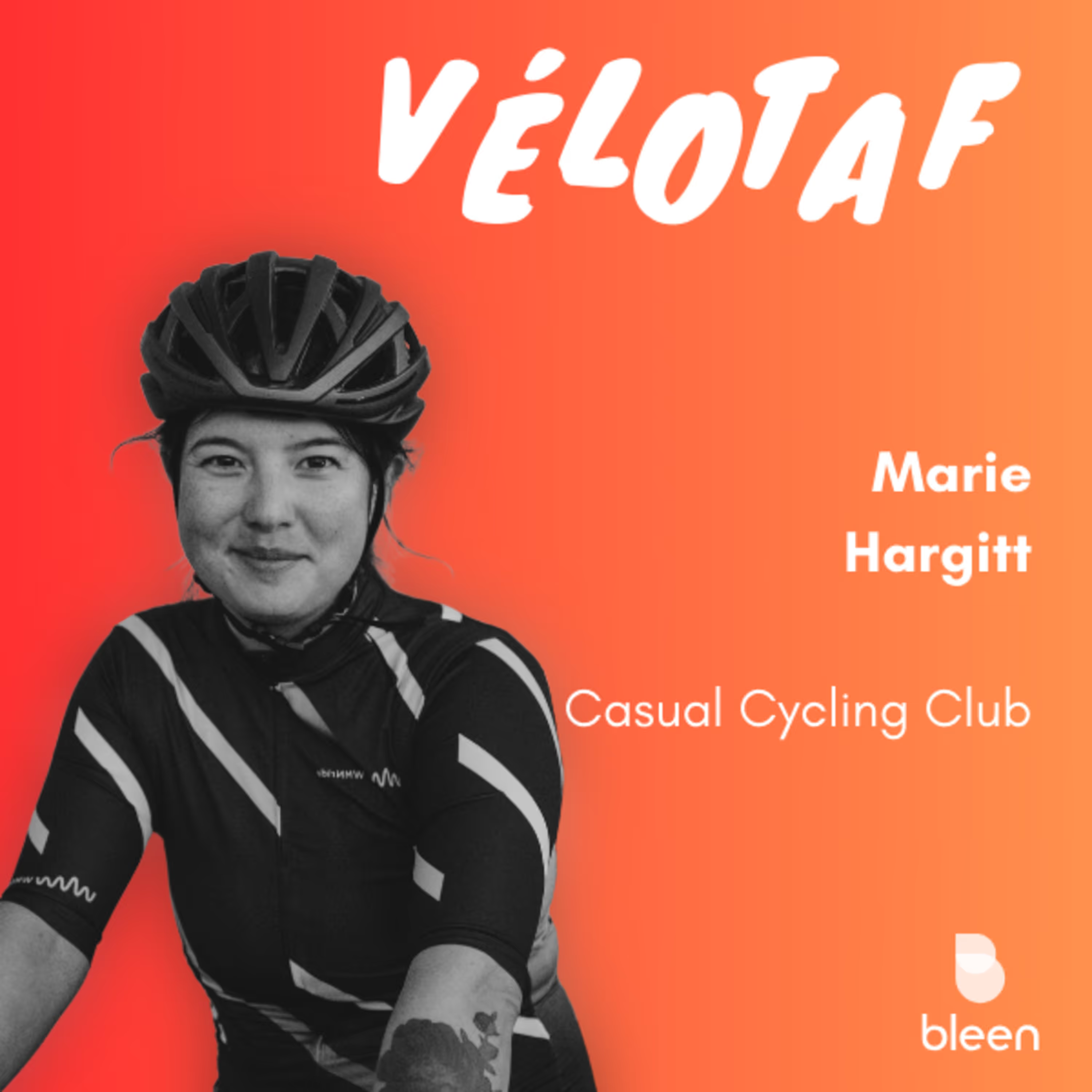
Marie Hargitt was cycling daily in Brussels when she joined WMNride, a women’s club founded by Julie Borgers. The level there was high, racing bikes the norm. Despite the gap, she kept going until she reached the group’s pace. But it was precisely that gap between everyday cycling and sport cycling that pushed her, together with Alison Abrams, to create the Casual Cycling Club in 2021, during Covid. Their first ride: 12 people, Brussels to Hoeilaart, city bikes, a picnic and back. The aim: to offer a space for women, trans and non-binary people who could not find a group suited to their level.
Party pace, tempo, chase: a group for every level
The CCC quickly understood that one group was not enough. The Sunday rides (casual rides) now come in several paces. Party pace welcomes all bikes (city, folding, electric) under an average of 18 km/h. Tempo pace goes up to 21 km/h, for road and gravel bikes. Chase pace, the fastest, reaches 24 to 26 km/h during the Wednesday evening after-work rides, from April to October, over around fifty kilometres starting from Coureurs Brussels.
“We wanted to create a space for people like us, who might not have been at the level needed to join the other cycling groups.”
The same principle applies off-road: three groups coexist, from beginner to intermediate level, with the Sonian Forest, less than 10 km from central Brussels, as their playground.
No-drop: never leaving anyone behind
Every CCC ride follows one strict rule: no-drop. If a rider slows down, the group adjusts. No one rides home alone. Each ride is led by at least one volunteer at the front and one at the back. The club now has around twenty volunteers, recruited individually from among regular riders rather than through an open call.
“We never let anyone fall behind. We try to adapt. That’s why we’re no-drop on all our rides.”
This approach stands apart from other Brussels clubs that describe themselves as open to all levels but where the actual pace weeds out the slower riders. The difference shows up in the numbers: since 2021, nearly 700 people have signed up to the CCC newsletter.
Racing, mechanics and workshops: broadening the scope
The CCC is not limited to rides. Alison Abrams set up two teams in the BCF league in Brussels, one casual and one more competitive, helping to raise the number of women in amateur races. On the technical side, Marie trained in bike mechanics before becoming a professional mechanic. Together with others, she runs free workshops for members: changing an inner tube, replacing brake pads, or simply feeling comfortable walking into a bike shop.
“Sometimes it’s hard to assert yourself in male-dominated spaces. You don’t feel very comfortable asking questions. The workshops are there to give you more confidence when you walk into that space.”
Collaborations with Komoot have made it possible to run route-planning workshops. The CCC has also set up progressive distance programmes: off-road from 30 to 115 km for the Smuggler’s Path in Limburg, and on-road from 30 to 100 km for the Rafa 100 in September.
A connected Brussels cycling ecosystem
The CCC refuses to duplicate what already exists. The club points its members towards other initiatives when they better match their needs. Regular partners include Ride Your Future (small-group specific workshops), Les Déchaînés (mechanics workshops and activist rides for women, trans and non-binary people), Les Hirondelles in Molenbeek (learning to cycle), and Coureurs Brussels (sport rides). The CCC’s mechanics workshops rotate through different Brussels neighbourhoods to stay geographically accessible.
“We didn’t necessarily find rides like ours out there. We tried to create what didn’t exist. And for what already exists, we promote it.”
Marie raises a concern for 2025: the change of government in Belgium threatens the subsidies of cycling non-profits such as GRACQ, Pro Vélo and Cyclo, some of which risk having to stop their activities.
Non-profit status and membership fees: structuring growth
Until recently, Marie and Alison funded all the CCC’s costs out of their own pockets: communication, the website, logistics. Becoming a registered non-profit aims to put the structure on a lasting footing and, eventually, to secure grants. In December 2024, the club launched an annual membership fee of 5 to 45 euros, adjustable to each member’s financial situation. The aim: to cover administrative costs without creating a financial barrier.
“Cycling remains something that matters economically. The entry cost to get into it is quite high. We try to stay accessible.”
Looking ahead, the CCC is considering bringing in experts (sports nutrition, travel stories), and dreams of a fleet of loan bikes to let members try different types of bike before investing.