The episode in detail
Les Roues Libres: the first school for inclusion in the cycling economy
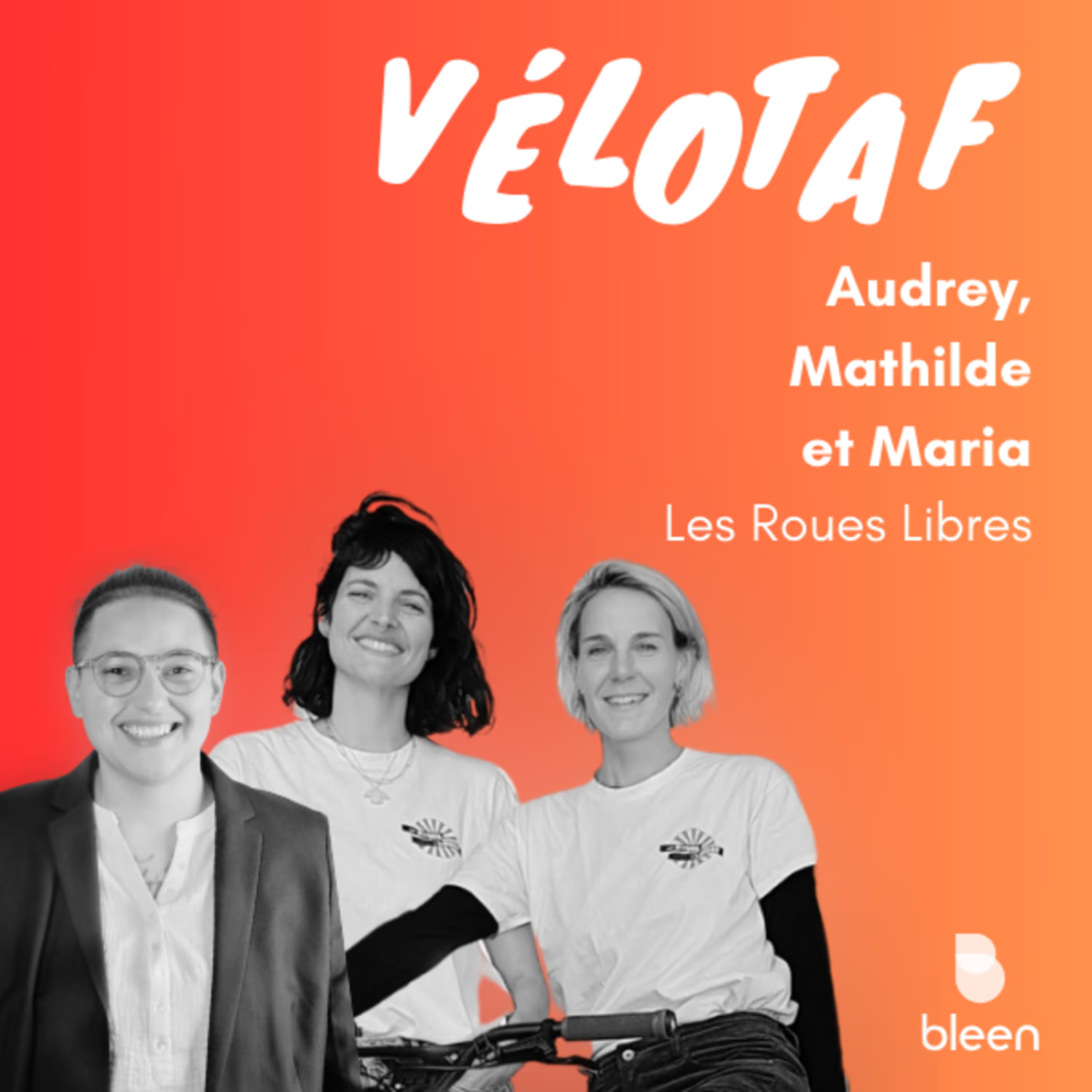
Founded in April 2023 by Mathilde and Audrey, the association Les Roues Libres is the first organisation in France dedicated to guiding, training and placing women and gender minorities in cycling jobs. Both founders bring around ten years of experience each in workplace equality and anti-discrimination, gained notably in the tech sector.
Their starting observation: the cycling economy is flourishing, particularly in Île-de-France, which accounts for 60% of the sector’s jobs and is the second-largest employment hub in the country. Yet women make up only 13% of that workforce. Les Roues Libres works across the whole chain: reaching out to candidates, training them, helping companies build inclusive workplaces, and creating conditions for women to stay in these jobs.
600 people surveyed: the findings of a first-of-its-kind study
In 2023, Les Roues Libres carried out a survey of 600 people (the quantitative part), supplemented by around twenty qualitative interviews. The aim: identify the barriers and motivations for women joining cycling jobs.
The results speak for themselves. Women see cycling jobs as jobs of the future, with real meaning. But they still see them as “men’s” jobs where they wouldn’t belong. They also feel they need to be over-qualified to get in, a gap that male respondents did not report.
“58% of respondents had already experienced sexist or sexual violence, particularly sexual harassment and sexism.”
The survey also reveals a strong presumption of incompetence: even trained and qualified, women are regularly second-guessed by their clients, colleagues or employers. The study was presented at Velo-city in Ghent and shared across the cycling world to support the association’s advocacy work.
Becoming a bike mechanic: training with Études et Chantiers
Les Roues Libres’ flagship programme is the bike-reuse mechanic training, run in partnership with Études et Chantiers. Études et Chantiers handles the technical side (bike mechanics, parts recovery, refurbishment), while Les Roues Libres provides inclusion modules: preventing gender stereotypes, training the teaching team in preventing sexist and sexual violence, one-to-one mentoring and a support line.
“We launched the third session of this mechanic training in March. And as always, we had at least 50% women and gender minorities.”
That 50% figure is striking in a sector where women make up only 20% of trainees. The association targets all women who are far from employment, with no age limit or background requirement, and works upstream with referral bodies (France Travail, missions locales, local associations) to break down the stereotypes that discourage women from these jobs.
Maria’s story: from bike reuse to a mobile workshop
Maria completed two training courses with Études et Chantiers in 2023: first as a bike operative (a month and a half), then as a bike-reuse mechanic (five months). The second course taught her to recover, store, clean and refurbish bikes and parts, at the heart of the cycling circular economy.
After finishing her training, Maria worked in the workshops of the Solicycle association. The experience was difficult.
“I just want to be respected as a professional, that’s all. We were in a workplace, in a professional setting, and I was doing a job.”
Facing sexism and homophobia as a lesbian woman, Maria left Solicycle to protect her mental health. She then trained in entrepreneurship and launched her own mobile bike repair workshop: a cargo bike fitted with a workstand, tools and essential parts (cables, housing, brake pads). Today she builds her business through word of mouth and also takes part in Les Roues Libres programmes to pass on her passion for mechanics.
Training companies against sexist and sexual violence
Les Roues Libres does more than train mechanics: the association works directly with companies, training bodies and associations in the cycling sector. The training on offer includes: preventing gender stereotypes, preventing sexist and sexual violence, inclusive recruitment, inclusive communication, and internal investigation procedures.
“Sexist behaviour, a so-called joke that isn’t a joke, is against the law. So there are penalties.”
In December, the association trained the volunteers of the Maison du vélo in Toulouse (around 25 staff and many volunteers). It also produced content for an FUB (Fédération française des usagers de la bicyclette) MOOC, aimed at organisations in the Vélo & Go programme, on preventing sexist and sexual violence.
The point is to remind everyone of the legal framework: employers’ health and safety obligations also apply to volunteers and members. Many small associations underestimate this responsibility.
A network of partners supporting gender balance
The association runs on a hybrid funding model, backed by the City of Paris (since the training programme began), the RATP foundation, the Massif foundation and the Seine-Saint-Denis department (93). These partners factor gender equality and workplace balance into their funding calls.
Les Roues Libres also works with the cyclo-logistics world. Chloé Bouilloux, of Cargonautes, mentors within the association’s programmes and connects trainees with women working in cycling. The association is also working with La Poste on a consortium to renew the Véligo bike fleet in Île-de-France, with a goal of more balanced recruitment in the technical teams.
“En piste vers les métiers du vélo”: opening up new possibilities
Beyond mechanic training, Les Roues Libres launched a programme introducing cycling careers called “En piste vers les métiers du vélo”. This four-week pilot programme, tested in January, introduces participants to cyclo-logistics, cycle tourism, cycling mobility outreach, design and frame-building. The partner Targo, a social and solidarity economy player, helps participants firm up their career plans.
The association also runs cycling refresher programmes with Solicycle in Seine-Saint-Denis (93). The link between riding a bike and working in cycling is direct: 90% of the professionals surveyed ride a bike daily. Going into cycling schools to tell women that their riding could become a job opens up a career path they had often never considered.
“The bike is wonderful, because it discriminates against no one. It only offers freedom, and lets everyone get around independently.”