The episode in detail
BTwin and city bikes: Herman Van Beveren’s mission
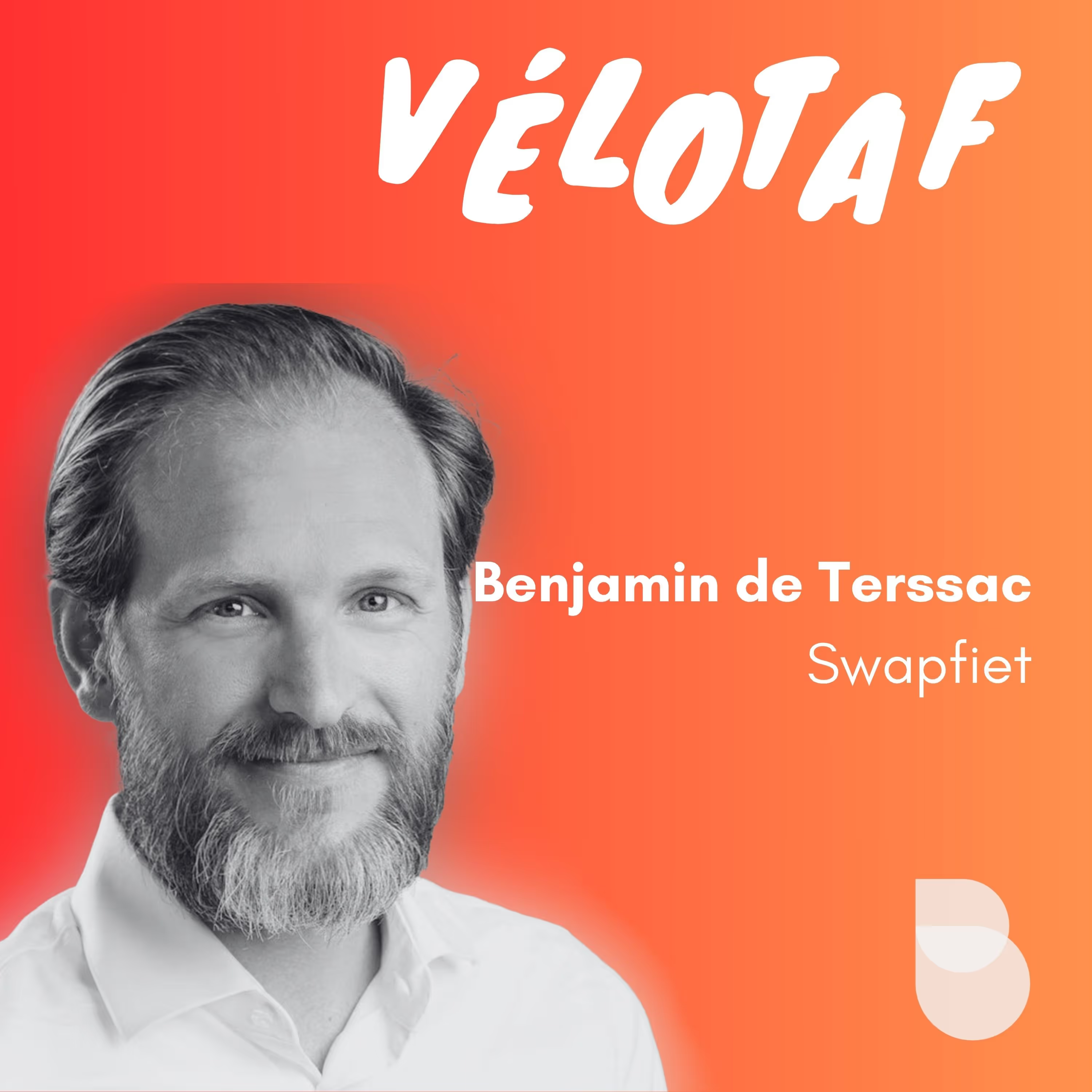
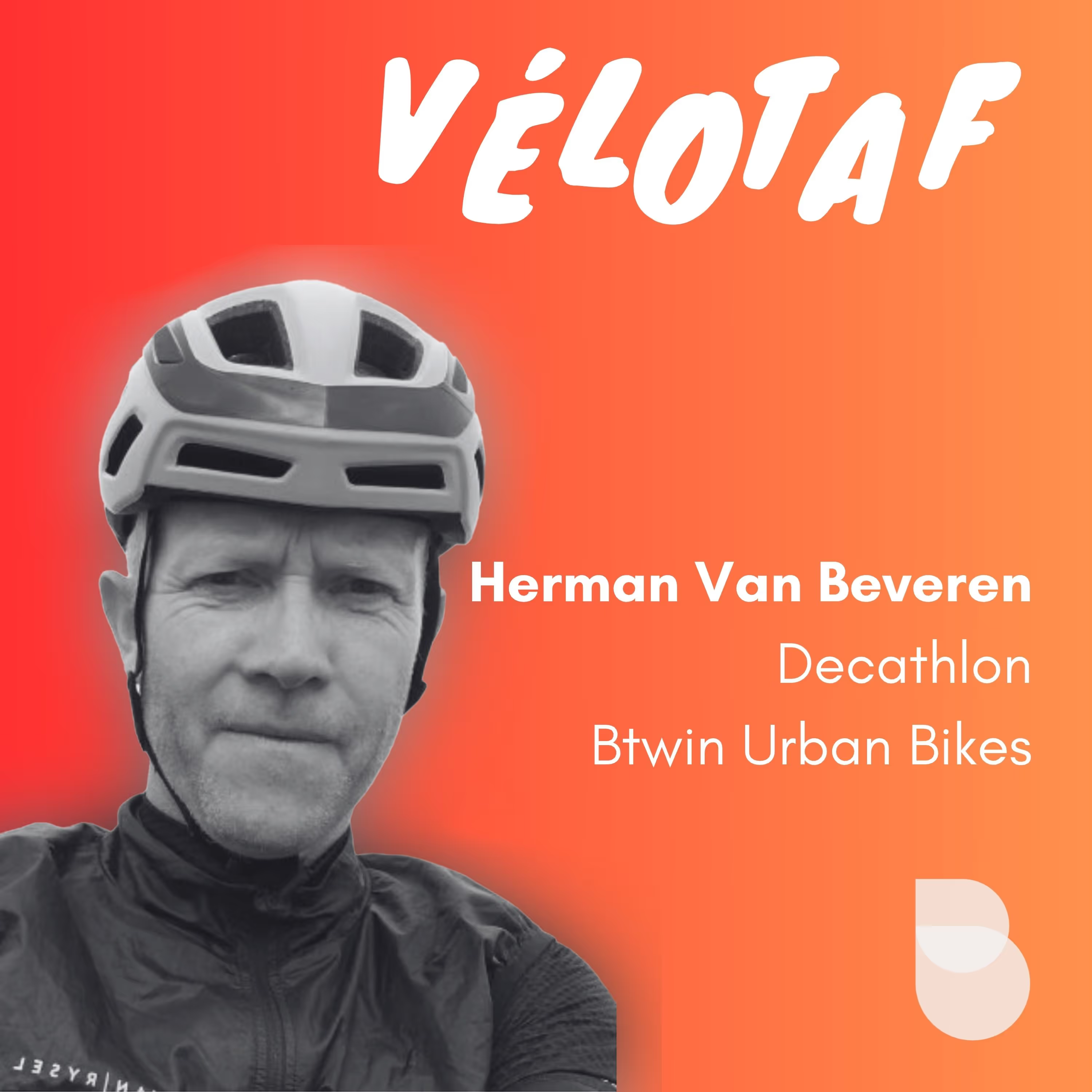
Herman Van Beveren heads development of the BTwin brand at Decathlon, which covers city bikes, folding bikes and children’s bikes. A former director of Decathlon Belgium, he asked to change roles to focus entirely on city cycling. His conviction: if every trip under 5 kilometres were made by bike, global CO2 emissions would fall by 25%. This figure, drawn from independent studies, underpins his entire approach. In this episode of the Vélotaf podcast, he explains how Decathlon supports the shift to active travel and presents an electric cargo bike able to carry 80 kilos on the back.
Five kilometres by bike: faster, cheaper, better for health
Herman sets out the benefits of bike commuting methodically. Health comes first: a daily 5-kilometre round trip matches the physical activity the human body needs. At Decathlon Belgium, employees who cycled to work were healthier than the rest, backed by internal statistics. Speed comes next: under 5 kilometres, a bike is almost always faster than a car in an urban area. Up to 10 kilometres, it stays competitive.
“50% of trips are under 5 kilometres. We could very easily reach a 50% modal share for bikes. It’s a matter of will and cycle tracks.”
Cost is a decisive argument. A bike weighs 20 kilos, a car 1,000: 50 times less material, 50 times less footprint to manufacture. In energy terms, an electric bike covers 200 kilometres on 1 kWh, against 3 to 10 kilometres for an electric car. Maintenance costs a fraction of that of a motor vehicle.
Cycle tracks, the first lever for bike mobility
Herman is categorical: the main barrier to bike commuting is not the weather, it’s the infrastructure. In Belgium, it only rains 7.1% of the time. Over a month of bike commuting, he only put on rain gear once or twice. The weather argument doesn’t hold up.
“It’s not the weather. In Spain, when there are cycle tracks, there are cyclists. When there aren’t, there are no cyclists.”
Decathlon sees the correlation in its sales worldwide: stores in cities with cycle tracks sell significantly more city bikes. The company works with European associations to campaign for cycling infrastructure. Herman notes that new tracks are being built across Europe. Nowhere are they being removed.
Decathlon Belgium: 70% of staff cycle to work
When Herman ran Decathlon Belgium, the Ghent store had 70% bike commuters. Three measures contributed to this: installing showers for sports cyclists, secure bike storage areas, and the Belgian legal framework, which pays 24 to 25 cents per kilometre for bike commutes.
“Those who come on an electric city bike and aren’t in a huge hurry don’t sweat much. You don’t need to take a shower.”
Herman points out that a shower isn’t essential for everyone. An electric bike at a moderate pace takes slightly more effort than walking. On his own 12-kilometre commute between Grand-Bigard and Evere, he took 26 minutes on a VAE (vélo à assistance électrique, an electrically assisted bike), at the same speed as a road bike, without sweating. The journey time was the same every day, something no car can guarantee in Brussels traffic.
The BTwin electric cargo bike: replacing the second car
Decathlon is preparing an electric cargo bike able to carry 80 kilos on the back. Two children, a partner, or a load of shopping equivalent to a supermarket trolley. The aim is to cover the 10% of trips where a standard bike isn’t enough: bulky shopping, transporting young children.
“I think that with a bike like that, a family can go from two cars to one.”
Electric assistance is essential on a cargo bike: without it, the slightest slope or headwind makes the ride hard going. Electrification opens up possibilities that a purely pedal-powered bike doesn’t allow. BTwin rounds out its range with electric city bikes at different price points, folding bikes and children’s bikes. The brands Rockrider (mountain bikes), Van Rysel (road) and Riverside (touring and gravel) cover the other disciplines.
Bikes as a fundamental right to mobility
Herman places the debate beyond ecology. Mobility is a fundamental right. A car is expensive. Public transport doesn’t serve every neighbourhood or every workplace. A bike, by contrast, is affordable and doesn’t depend on any fixed network. Dutch studies show that societies where active travel dominates are happier, more equal, with fewer markers of social status. Children gain independence, parents gain freedom. For Herman, the state has a fundamental role: creating the cycling infrastructure that makes all this possible.