The episode in detail
JCDecaux and bike-sharing: from Lyon to Brussels
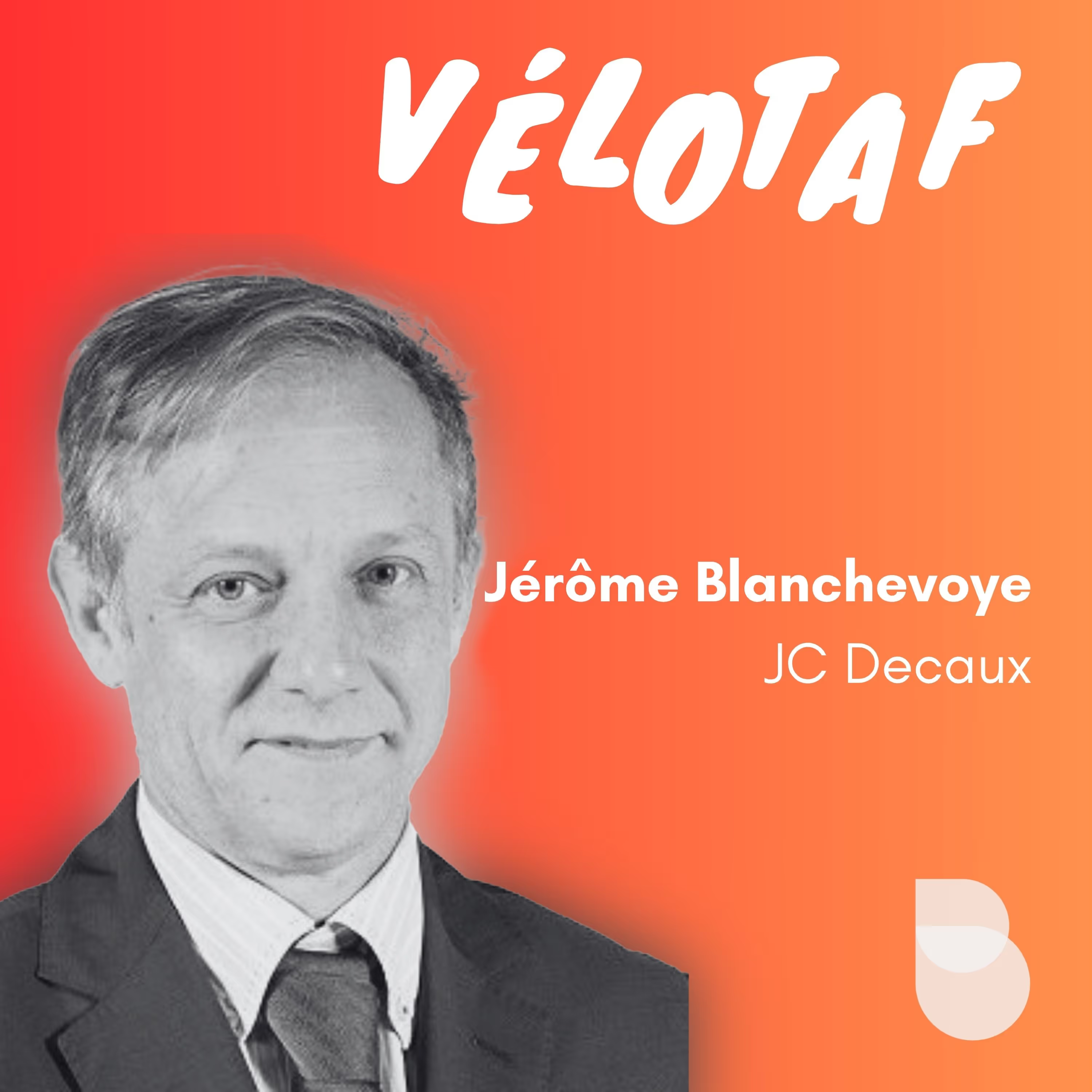
Bike-sharing has transformed urban mobility in Europe. JCDecaux is one of its founding players. In 2005, the group launched Vélo’v in Lyon, with a success that outstripped every forecast. Paris followed with Vélib’, then Brussels with Villo in 2008, and Luxembourg with Vélo. Jérôme Blanchevoix, JCDecaux’s deputy managing director for Belgium and Luxembourg, has overseen these projects for more than 20 years. In this episode of the Vélotaf podcast, he traces the history of a unique economic model in which outdoor advertising funds a transport service accessible to everyone.
The JCDecaux model: advertising in the service of transport
Jean-Claude Decaux invented the concept in the 1960s. Banned from advertising along motorways, he offered local authorities a deal: fund free Abribus bus shelters through the advertising displayed on them. The model extended to public toilets, urban information panels, then to bike-sharing. Today, JCDecaux operates in 80 countries with more than 300,000 pieces of street furniture.
“He offered this service to local authorities for free. Advertising funds public services and makes the bike extremely affordable, without a single euro of public money being spent.”
The Villo system in Brussels comprises 5,000 bikes, 360 stations and 40 permanent staff: rebalancing staff to keep the stations stocked, field mechanics, a quarterly maintenance workshop and a call centre. Station locations are decided in consultation with the local councils, the region and the police.
Electric bike-sharing: a second revolution
Jérôme describes the electric bike as a second first time. The sense of freedom of an ordinary bike is multiplied tenfold with electric assistance. The hills of Brussels and Luxembourg, long a deterrent, become manageable. JCDecaux is working on improving its assistance algorithms to make climbing even smoother.
“The electric bike is a second first time. Honestly, it’s always really great.”
The recently launched electric fleets are proving very successful. They considerably widen the potential audience for bike-sharing: acceptable distances increase, physical effort decreases, and the barrier of sweating disappears for bike commuters in office clothes.
Political vision and infrastructure: the keys to success
For Jérôme, cycling in the city doesn’t develop on its own. It takes political vision. Gérard Collomb in Lyon believed in bike-sharing before the demand was visible. Paris followed. The mechanism is the same everywhere: a credible offer generates a demand that didn’t exist in people’s habits.
“Every time we put a Vélo’v into service, there were two or three people nearby who had bikes of their own stashed away. It brought cycling back into fashion.”
The main barrier identified by JCDecaux’s studies in Brussels is the feeling of being unsafe on the road. Jérôme alerted the regional Minister for Mobility to the need for cycling infrastructure. He points out that without dedicated cycle tracks, even the best bike-sharing system won’t fully take off. The pandemic accelerated the movement: a boom in Villo subscriptions, a shortage of bikes in shops, and temporary cycle tracks made permanent.
From a childhood bike to urban cycling: a personal journey
Jérôme grew up in Soissons, in Picardy, where the bike meant freedom. His grandfather chaired the local cycling club. His father rode every Sunday. In Paris, he lost sight of cycling for 18 years for lack of infrastructure. It was the move to Brussels and the launch of Villo that triggered his return to it.
“When you launch a bike-sharing system, it really changes the character of the city. You can see that the character of the city has changed.”
He uses the bike whenever a meeting falls within Brussels’ urban area. He also tries competing systems in cities where JCDecaux isn’t present. He chats with other cyclists at red lights, picking up user feedback along the way without revealing his role at the operator.
The bike won’t save the planet on its own
Jérôme takes a pragmatic stance on ecology. The bike cuts individual emissions, but he rejects the simplistic argument that pedalling alone would solve the climate crisis. The biggest share of household energy use remains heating. Electric bikes use electricity whose production raises questions. For him, the real answer lies in massive investment in renewable energy, not isolated individual gestures. The bike remains a smart, practical and healthy way to get around. That’s already reason enough to take it up.