The episode in detail
Cyfac, 40 years of handcrafted bike-making in France
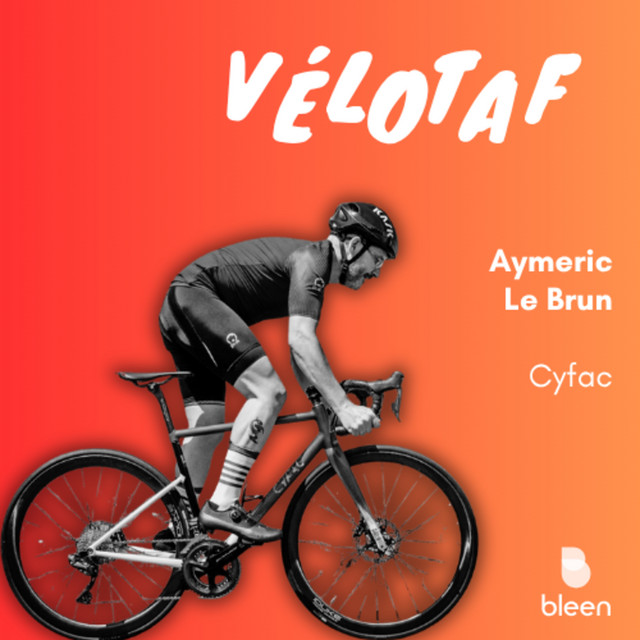
Cyfac stands for Cycle Fabrication Artisanale de Cadre, craft frame-making. Behind that name is a company founded in 1982 in Tours by Francis Quillon, a former professional cyclist turned frame builder. For four decades, Cyfac has specialised in custom steel bikes, 100% made in France, for professionals and enthusiasts alike. Aymeric Le Brun, its current director, tells Vélotaf the story of a craft that has held out against the globalisation of cycling.
Francis Quillon first supplied professional riders in the 1980s and 1990s. Cyfac frames rode in the peloton, sometimes under other brand names, a common practice at a time when sponsors put their logo on frames built by craftspeople. Today, the company employs around ten people and produces about 300 frames a year, a craft-scale volume that allows individual follow-up on every project.
From steel to carbon: why custom bikes endure
In the 1980s, Cyfac built exclusively in steel. Francis Quillon then explored titanium in the early 1990s, aluminium after that, and carbon once professional riders demanded lighter frames. Aymeric Le Brun puts this evolution down to performance, not fashion.
“Cyfac has always had a forward-thinker at its head, Francis Quillon, who never wanted to rest on his laurels. He explored other materials early on, because at a certain point, steel had its limits too.”
But steel hasn’t had the last word. New steel tubing (Columbus, Reynolds) offers a weight-to-stiffness-to-comfort balance that industrial carbon doesn’t replicate the same way. A custom steel frame today weighs around 1.5 kilos, a reduced gap with carbon. And above all, steel can be repaired. A cracked carbon frame is often beyond saving. A broken steel frame can be rewelded. For customers who want a bike to last 20 or 30 years, that’s a decisive argument.
Building a custom bike together with its future owner
At Cyfac, the building process starts with an in-depth conversation with the customer. Body measurements, riding style, ambitions, budget. The frame is designed to measure, tube by tube. Geometries don’t come from a catalogue: they’re calculated for each rider. Aymeric Le Brun stresses the human side of this approach.
“Never skip visiting the workshop. It’s not only the final result that matters, it’s the path followed to build the bike. Meeting people, putting a face, names and tools to how a bike is made, that’s a pretty incredible experience.”
A custom Cyfac bike starts at around 3,000 euros for a bare steel frame, and can exceed 6,000 euros with custom paint and a full build. A high price in absolute terms, but reasonable set against the product’s lifespan and level of personalisation. The workshop also does custom paintwork, a rare skill that adds to each bike’s identity.
Carbon tandems and the Paralympic Games
Cyfac occupies a unique niche in Paralympic cycling: building carbon tandems for visually impaired athletes. The tandem is the only way for a visually impaired cyclist to compete, with a sighted pilot at the front. The technical constraints are extreme: two bodies, two cranksets, doubled forces on the frame.
“At the last Paris Paralympic Games, in paratriathlon and cycling, most of the French athletes were riding our bikes. That’s our pride.”
This market is tiny in volume but demanding in engineering. Federations and sports associations order the tandems, not the athletes directly. For Cyfac, it’s a technical showcase that also feeds the development of its road and gravel frames.
Paris to Beijing: 100 Cyfac bikes on the road
In 2008, Cyfac built 100 identical bikes for an unusual project: riding from Paris to Beijing to mark the Olympic Games. About a hundred cyclists set off in March and arrived in August, with 10 spare bikes in case of breakage. All 100 frames arrived intact. Two participants dropped out, but for human reasons, not mechanical ones.
This kind of project shows Cyfac’s ability to produce consistent small series while keeping its craft quality. The company has also built frames for Hermès and takes part from time to time in collaborations with other craftspeople, from bamboo to wood.
Repair by Cyfac: repairing rather than replacing
Cyfac has built up a frame repair business under the name Repair by Cyfac. The idea: repair carbon frames damaged in crashes, and restore old steel frames that have a history. The economic argument is straightforward.
“The racer thinks: if I have to put another 5,000 or 6,000 euros into a bike when it can be repaired, that’s a shame. On the steel side, it’s more about sentimental value. We’ve had CBTs, Peugeots, Motobécanes.”
This activity serves two purposes. It brings in extra revenue and it positions Cyfac as part of the circular economy in cycling. Large industrial brands that have their bikes made in Asia can’t repair their own frames, because they don’t build them. The craft frame builder, by contrast, knows how to rebuild what they learned to build.
The economic fragility of cycling craftspeople
Despite the quality of its work, Cyfac is going through a difficult period. Aymeric Le Brun has had to place the company into court-ordered liquidation with continued trading, a procedure that allows the business to keep operating while a buyer is sought. Wages are covered by the AGS guarantee fund, bikes already in production are delivered, and the business carries on.
“The aim of this procedure was first to protect the team. It was also to be able to keep going to deliver our customers’ orders. And then it was about saying: if a turnaround is possible, it’s through this procedure.”
The economic model of a ten-person workshop producing 300 frames a year is structurally fragile. Margins are thin, investment costs are high (paint, tooling, training), and competition from imported industrial frames pushes prices down. Cyfac is not an isolated case: several French frame builders have closed in recent years.
Becoming a frame builder: a craft of passion to pass on
Aymeric Le Brun points to a paradox. The frame builder’s craft appeals to more and more people, and requests for internships or training keep growing. But making a living from it stays hard. An independent frame builder starting a workshop can have a great time for two or three years, then run into economic reality.
Yet the craft is essential to the industry. Without frame builders able to repair, restore and build to measure, a whole part of French cycling know-how disappears. Cyfac trains apprentices and takes on interns, but passing on the craft takes time. Welding a steel frame with the precision required isn’t learned in six months.
For anyone considering ordering a custom bike, Aymeric’s advice is direct: get in touch, set a budget, and above all, come and visit the workshop. A handmade bike is more than a product, it’s a story you write together with the people who build it.