The episode in detail
Le Concentré Vélo: a bike newsletter that stands out
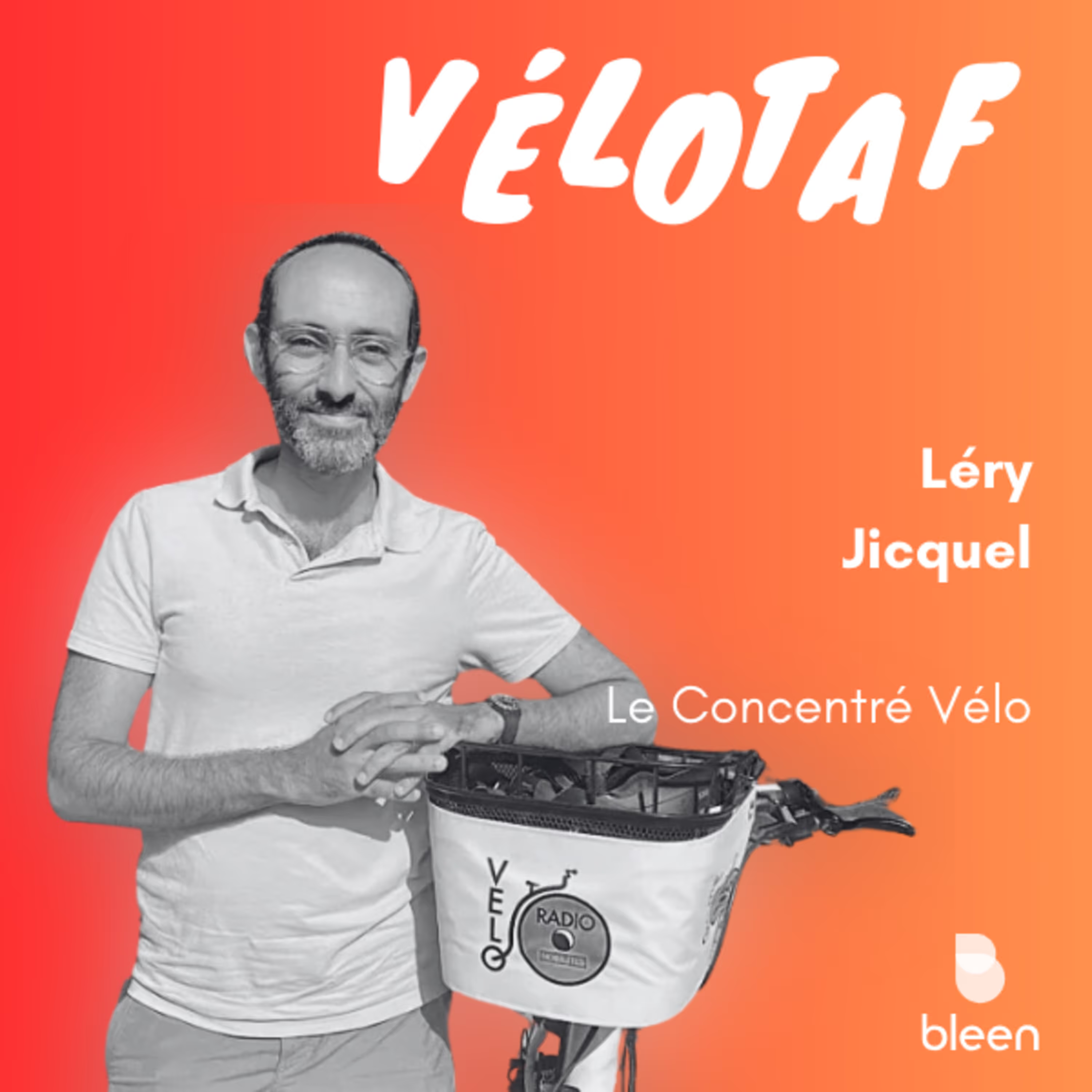
Le Concentré Vélo brings together 5,700 subscribers every Thursday around a cycling press review without a single word on competitive cycling. Léry Jicquel, its creator, uses cycling as a lens to talk about politics, the economy, tourism, innovation and design. The newsletter is made up of a 200 to 300 word editorial, one sponsored item, six news items and job listings from the bike sector.
“Cycling is just a way of talking about other things. We talk about politics, the economy, tourism, science, through the lens of cycling.”
With an open rate of between 55 and 60%, Le Concentré Vélo beats the sector average. Léry puts this down to consistency (never a missed Thursday), a personal tone and, above all, word of mouth: around twenty new subscribers arrive within 24 hours of each edition, without coming from social media.
Sponsored content: the transparency dilemma
The business model relies on sponsored items built into the content. Léry works on every partnership so it offers information or entertainment, even to a reader with no interest in the product. Not every sponsor is after clicks: one rural cargo bike company simply needed to secure 10 meetings with local authorities. That goal was met.
A survey of subscribers found that a minority are bothered by the advertising, but none unsubscribed over it. Léry applies a product management principle: listen to what users say, but above all watch what they do.
Creating a bike newsletter: discipline and consistency
Léry’s advice for launching a cycling media outlet: start quickly, ask readers for feedback often, test formats regularly, and above all be disciplined. Reply to every comment, accept every meeting request, and always say no to requests to promote events or fundraisers, to avoid spreading too thin.
“Start quickly, ask your readers for feedback as often as possible, test things, and above all, be disciplined.”
Growth, entirely organic, rests on trust: readers share the newsletter because it has given them something of value.
Working in cycling: more than 120 possible jobs
With lejobvelo.fr and a guide co-written with associations, Léry has identified more than 120 jobs in the bike sector. Well beyond mechanics: sales staff, engineers, painters, assemblers, local authority cycling officers, IoT specialists, cycle tourism professionals, trainers, communications staff.
The message: you can move your existing skills into the bike industry without necessarily training as a mechanic. A salesperson is still a salesperson, whether they sell software or cargo bikes.
The bike market: a supply problem, not a demand problem
The sector is going through a tough patch. Some retailers are in receivership, stock is hard to shift. But Léry qualifies this: the problem isn’t demand, it’s the mismatch between supply and buying power. Bikes under 3,000 euros sell well. Above 6,000 euros, the market stalls.
“In some bike shops, there’s no baguette. Everything is high-end. No affordable product for people who just want access to cycling mobility.”
The first post-Covid buyers, who had the means, have already bought their bikes. The next wave will be made up of people with tighter budgets. Reconditioned bikes and platforms like Rutile Bike meet that demand.
White papers: creating content that’s useful and usable
Léry produces white papers for bike sector players, with one strict rule: the document must create a real benefit for its reader. He worked with Tandem on a guide for company cycling officers (around 500 downloads in this niche market), helped Rutile Bike structure a manifesto for the reconditioned bike industry, and turned a 150-page parliamentary report into a punchy 10-page document with the 10 key actions.
“At the very least, what you create has to create a benefit for the people you’re trying to help. Otherwise, it can’t work.”
Putting cycling back on the agenda: three courses of action
Faced with the end of the national cycling plan and purchase subsidies in France, Léry proposes three courses of action. First, a collective communication campaign: if every bike manufacturer and retailer contributed 100 to 200 euros, the budget would fund a promotional clip aired before the evening news. Second, training sector figures (association presidents, entrepreneurs) to speak usefully on social media.
Third, Léry is working on a rewards app for cyclists. The idea: cycling 10% more in a month unlocks a voucher at a local shop. The aim: increase the visibility of cyclists on the street and win over reluctant friends and family with a concrete argument rather than an ecological one. A hundred people had already pre-registered at the time of the interview.