For a long time, corporate mobility was treated as a logistical issue: providing parking spaces, reimbursing travel expenses, optimising journeys… Today, the most forward-thinking organisations view mobility as a genuine driver of transformation: a driver that helps attract talent, reduce emissions and improve staff wellbeing. This perspective leads us to take a broader look at the ways in which we travel.
But how can we change behaviours that have been ingrained for years, or even decades?
To answer this question, we are sharing the insights of a few mobility managers whom we were delighted to welcome onto our Vélotaf podcast.
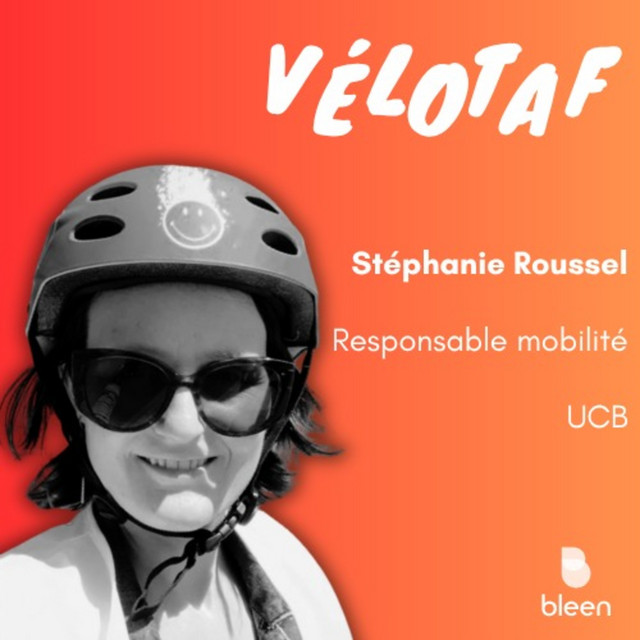
Stéphanie Roussel: eco-adviser and mobility manager at UCB, a Belgian pharmaceutical production site with 3,000 employees in Braine-l'Alleud. (episode available here)
Patrick Jacquemin: Mobility Manager at the University of Liège. (episode available here)
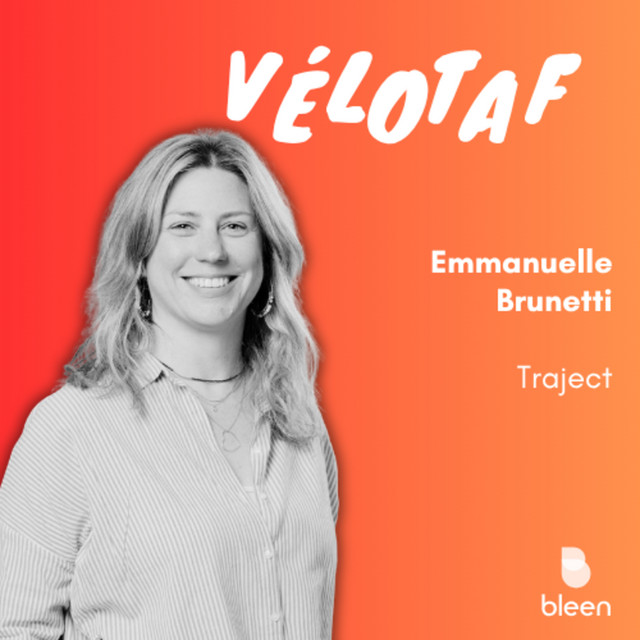
Emmanuelle Brunetti: branch manager at Traject. (episode available here)
In this article, you will discover the main barriers to change, the incentives that can be used to persuade those who are reluctant, and practical ways to achieve this.
Contents:
- What are the main barriers to change?
- How can we encourage people to rethink the way they travel?
- 2.1. What is the role of a mobility manager?
- 2.2. The importance of support
- 2.3. The importance of one’s social circle
- How can we adapt the infrastructure?
- 3.1. The importance of safety
- Common mistakes made by local authorities
- 4.1. What role can local authorities play?
1. What are the main barriers to change?
Our three experts all agree: the primary obstacle to change is human.
According to Stéphanie Roussel, Head of Mobility at UCB, we are naturally drawn to routines. Once a mode of travel has become second nature, it becomes difficult to question our choices. Change involves relearning, experimenting and sometimes making mistakes, which requires significant mental effort.
Emmanuelle Brunetti, Director of Traject, shares this view, pointing out that mobility directly affects people’s daily lives. There are many reasons for reluctance: a lack of information, a fear of cycling, family commitments or simply the impression that ‘the car remains the simplest solution’.
These barriers are often more perceived than real. Many employees think they cannot cycle to work, when a combination of car and cycle, train and cycle, or car-sharing could work. In fact, solutions do exist. But sometimes, people need a little support to get started.
2. How can we encourage people to rethink the way they travel?
2.1. What is the role of a mobility manager?
Behind every successful mobility policy, there is often one person who coordinates, drives and supports change: the mobility manager.
Their aim? To create the conditions that enable staff to gradually change their travel habits.
This task begins with a phase of listening and assessment. Before proposing solutions, the mobility manager must understand the realities on the ground: where employees live, what their journeys are like, what modes of transport they use and what barriers prevent them from considering alternatives.
Their role is also that of a facilitator. They identify the most suitable approaches for their organisation, put practical measures in place, organise awareness-raising initiatives, coordinate with internal and external partners, and support staff as they take their first steps towards new mobility practices.
But their work does not stop at implementing tools. For Emmanuelle Brunetti, Stéphanie Roussel and Patrick Jacquemin (mobility manager at the University of Liège), mobility is, above all, a matter of behavioural change. The mobility manager must therefore ensure the initiative is sustained over time, build a community of ambassadors, keep the issue on the organisation’s agenda and foster a genuine culture of mobility.
Finally, they act as a link between different departments within the organisation. Human resources, senior management, CSR managers, facilities managers and even local authorities all have an influence on mobility. The mobility manager coordinates between these stakeholders to develop a coherent strategy tailored to the company’s needs.
As you will have gathered, the mobility manager is an agent of change whose mission is to make alternatives to the car more visible, more accessible and more desirable.
2.2. The importance of support
What lesson have our mobility managers learnt? Nobody changes on their own.
The most effective initiatives are not necessarily the most expensive. They are often the ones that enable staff to try things out, share ideas and help one another.
At UCB, cycling coaching simply involves accompanying someone on their first few journeys. The coach’s role might be to show a route, share a few practical tips or offer reassurance whilst out on the roads.
At the University of Liège, Patrick Jacquemin has set up a similar mentoring scheme. It is inexpensive and enables experienced cyclists to accompany colleagues who wish to give it a go. In his view, simply forging a bond between peers is often the deciding factor.
Emmanuelle Brunetti also emphasises the importance of personalised support: taking the time to listen to people’s concerns, understand individual constraints and develop tailored solutions.
When it comes to mobility, education is more effective than simply telling people what to do.
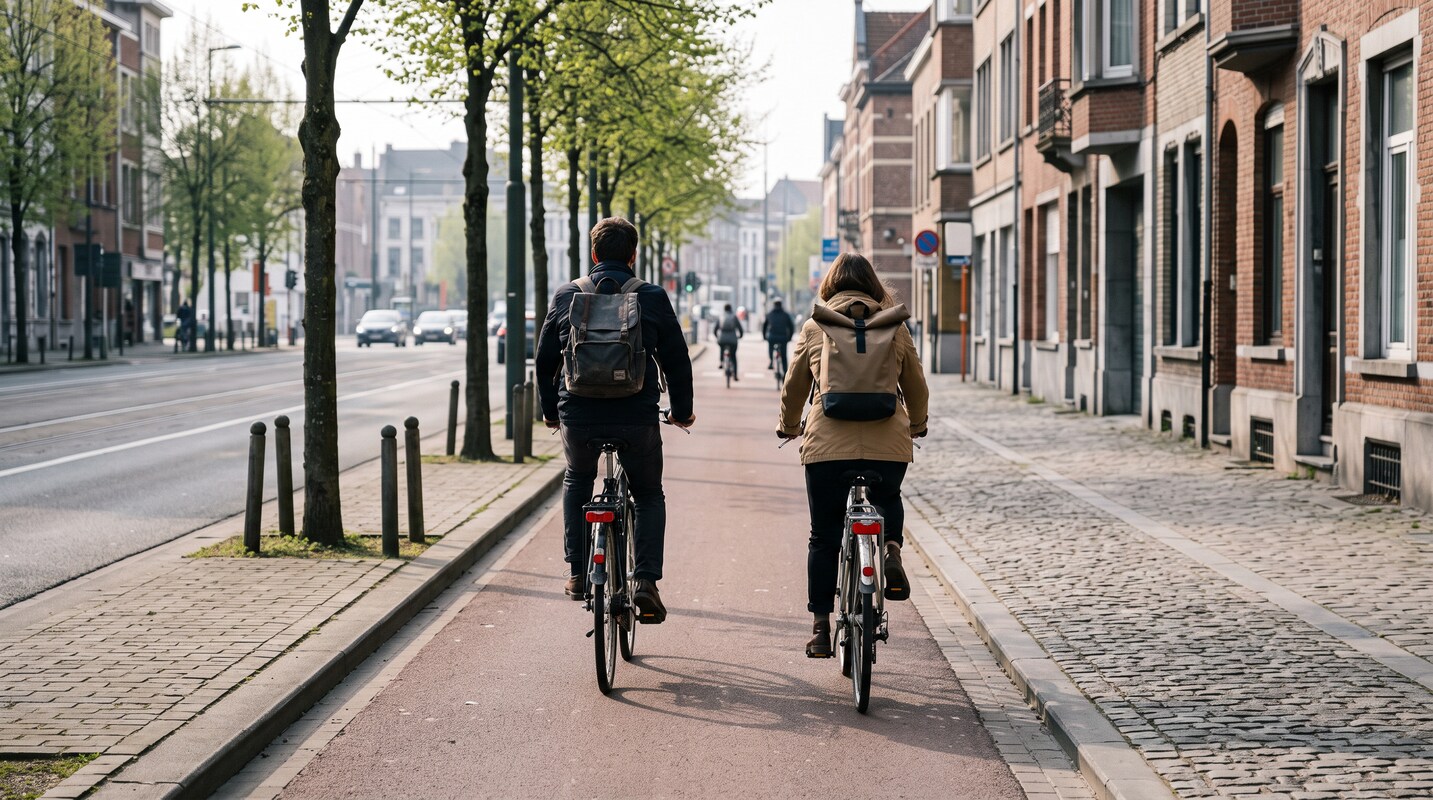
2.3. The importance of peer influence
Mobility managers regularly observe that employees are often more receptive to a colleague’s personal account than to an official message.
Seeing someone just like them regularly cycling to work, taking the train or carpooling makes the change feel more tangible and credible. For example, at UCB, ambassadors share their journeys and experiences. This allows employees to identify with someone who lives in the same area or faces similar constraints. For Emmanuelle Brunetti, visible support from senior management is also essential. When a director or manager personally adopts sustainable travel practices, they send a strong signal to the rest of the organisation.
A culture of sustainable travel is fostered by leading by example.
2.4. The boost provided by financial incentives
For mobility managers, financial incentives are genuinely effective. Emmanuelle Brunetti emphasises that financial measures are among the schemes capable of producing relatively rapid results, particularly when they remove a financial barrier to adopting a new mode of travel.
Stéphanie Roussel’s experience at UCB supports this view. The company combines a cycling mileage allowance, a supplementary bonus for staff who cycle to work for at least 80 days a year, and incentives for car-sharing. For some employees, these benefits act as a real catalyst, as they have a tangible impact on their monthly budget.
However, all three speakers also caution against an approach that relies solely on financial rewards. A bonus does not resolve the fear of cycling, the lack of suitable infrastructure, or the force of habit. It may encourage people to give it a go, but it does not guarantee lasting change unless accompanied by other measures.
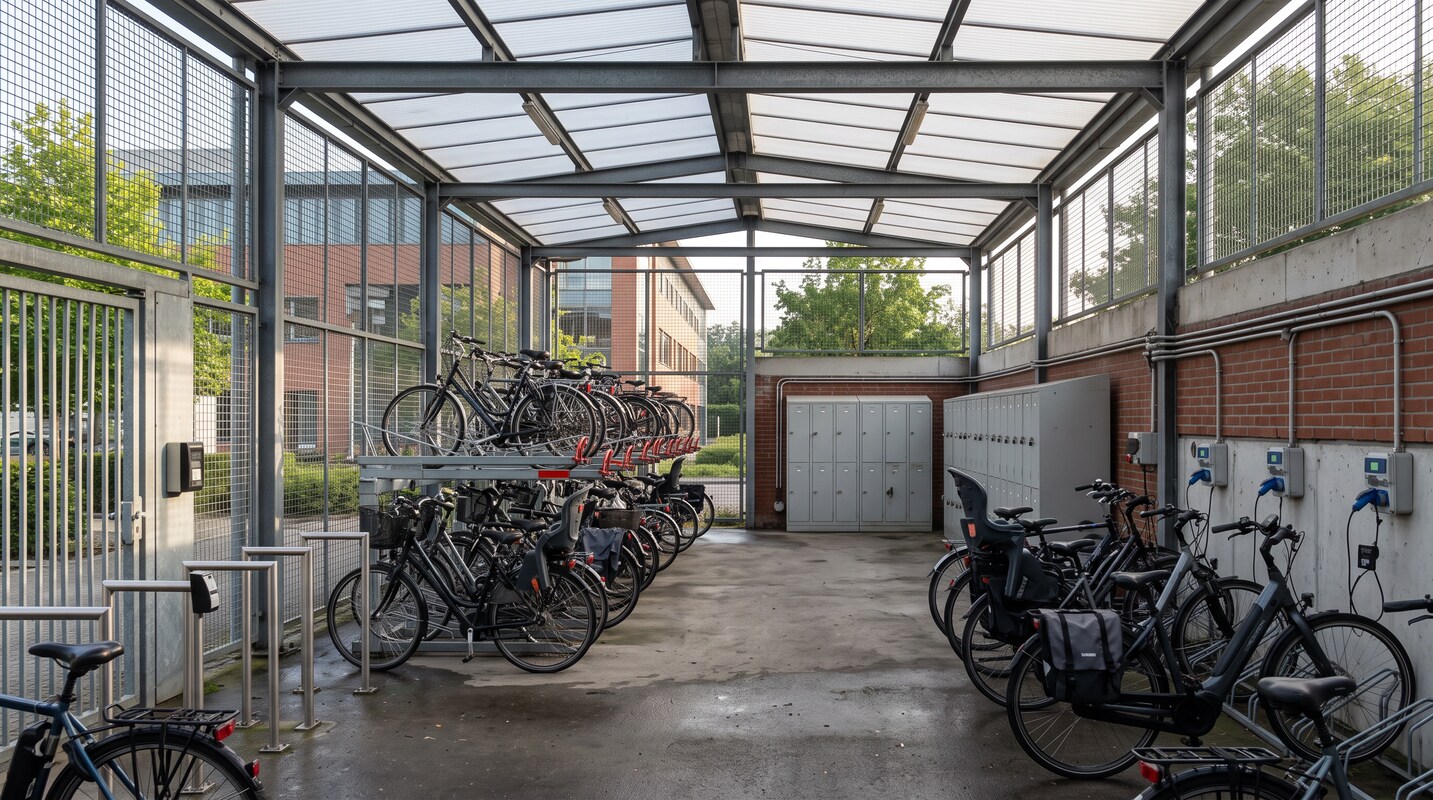
3. How can infrastructure be adapted?
The three speakers emphasise that infrastructure is a fundamental prerequisite. It is difficult to persuade someone to cycle if they consider their journey to be dangerous or if they cannot find any suitable facilities on arrival.
For example, this may involve providing various facilities:
- Secure cycle parking
- Showers and changing rooms
- Lockers
- Charging points for electric bikes
- Repair workshops or equipment
- Safe cycling infrastructure along the routes.
Stéphanie Roussel explains, for example, that at UCB, the Braine-l’Alleud site has showers and lockers. The team is looking into installing heated lockers to dry clothes and socks after the rain, with a trial phase first rather than a full-scale roll-out straight away. There are also tools for minor repairs – such as tightening a saddle or making adjustments on the spot – pumps for inflating tyres before setting off again, and charging points for electric bikes.
3.1. The importance of safety
A common mistake is to focus solely on the workplace whilst neglecting the rest of the journey.
Emmanuelle Brunetti notes that many workers still regard cycling as dangerous, particularly those who have never cycled in an urban environment or who have not cycled for a long time. The solution? Cycling safety courses: these courses teach the rules and reflexes needed to cycle in traffic with confidence.
At UCB, Stéphanie Roussel tells us that UCB’s internal social network hosts a discussion group for cyclists. This group also serves as an alert service: potholes, impassable sections, or fallen trees blocking the path. Once the problem has been reported, Stéphanie Roussel sometimes calls the local council to have the obstacle cleared and, in the meantime, a colleague passing by suggests a detour route that they have tried out. Knowledge of the local area isn’t just individual – it’s collective.
According to Patrick Jacquemin, secure parking is one of the major challenges facing cycling, particularly with the widespread adoption of electric bikes. Many cyclists are reluctant to invest in a bike or use one on a daily basis if they fear it might be stolen, whether at work or at home. For example, in Gembloux, more than half of students have access to secure cycle parking where they live. In Liège, the figure is closer to one in three students. Yet a third of students and two-thirds of staff own an electric bike (a piece of kit you wouldn’t just leave anywhere…).
4. Common mistakes made by local authorities
The mobility managers interviewed point out that the responsibility for change does not rest solely with employers or individuals. Local authorities also have a major role to play. However, certain mistakes recur regularly and limit the impact of mobility policies.
4.1. What role can local authorities play?
First mistake: seeking to promote cycling without addressing car use
According to Patrick Jacquemin, many local authorities seek to promote cycling whilst avoiding challenging the priority given to cars. Yet public space is limited. Creating comfortable and safe infrastructure often involves reallocating some of this space.
Emmanuelle Brunetti makes a similar observation when she highlights the considerable space taken up by vehicles that are parked in public spaces for much of the time. In her view, certain structural decisions may be unpopular but are necessary to promote a better balance between the various modes of transport.
Second mistake: prioritising high-profile projects over real needs
Another common mistake is to invest in spectacular or symbolic projects before tackling everyday problems.
Patrick Jacquemin cites the example of prestigious infrastructure or highly visible facilities that attract political attention but do little to meet users’ needs. Above all, cyclists expect continuous routes, secure parking facilities and reliable infrastructure for their daily journeys.
The most effective infrastructure is not always the most high-profile, but rather that which makes journeys simpler and safer.
Third mistake: setting targets without taking local circumstances into account
Not all local authorities start from the same position.
Patrick Jacquemin warns against the temptation to mechanically replicate regional or national targets without taking local realities into account. The potential for a modal shift depends on numerous factors: urban density, terrain, commuting distances and the quality of existing transport provision.
An effective policy must therefore be based on actual usage patterns and the constraints of the local area before setting quantified targets.
Conclusion
Establishing a culture of mobility is not about convincing everyone to give up their car overnight. On the contrary, the experiences of mobility managers show that change is built gradually, taking into account each individual’s circumstances. Travel habits are deeply ingrained and often respond to very real constraints. Changing them therefore requires more than just an awareness campaign or a few improvements.
Organisations that achieve sustainable results are those that create an environment conducive to change: a reassuring framework, suitable infrastructure, personalised support, credible ambassadors and consistent incentives. They prioritise listening over guilt-tripping, tangible benefits over moralising, and take a long-term view of their actions.
After all, a culture of mobility cannot simply be imposed. It is built when employees have the resources, trust and freedom they need to experiment with other ways of getting around. The role of the mobility manager is therefore not to impose a mode of transport, but to make change possible, desirable and accessible. It is this approach – both pragmatic and people-centred – that is undoubtedly the key lesson shared by those working on the ground.
Would you like to listen to the episodes featuring our three mobility managers?