The episode in detail
Bee To Green, the platform democratising the bike at work
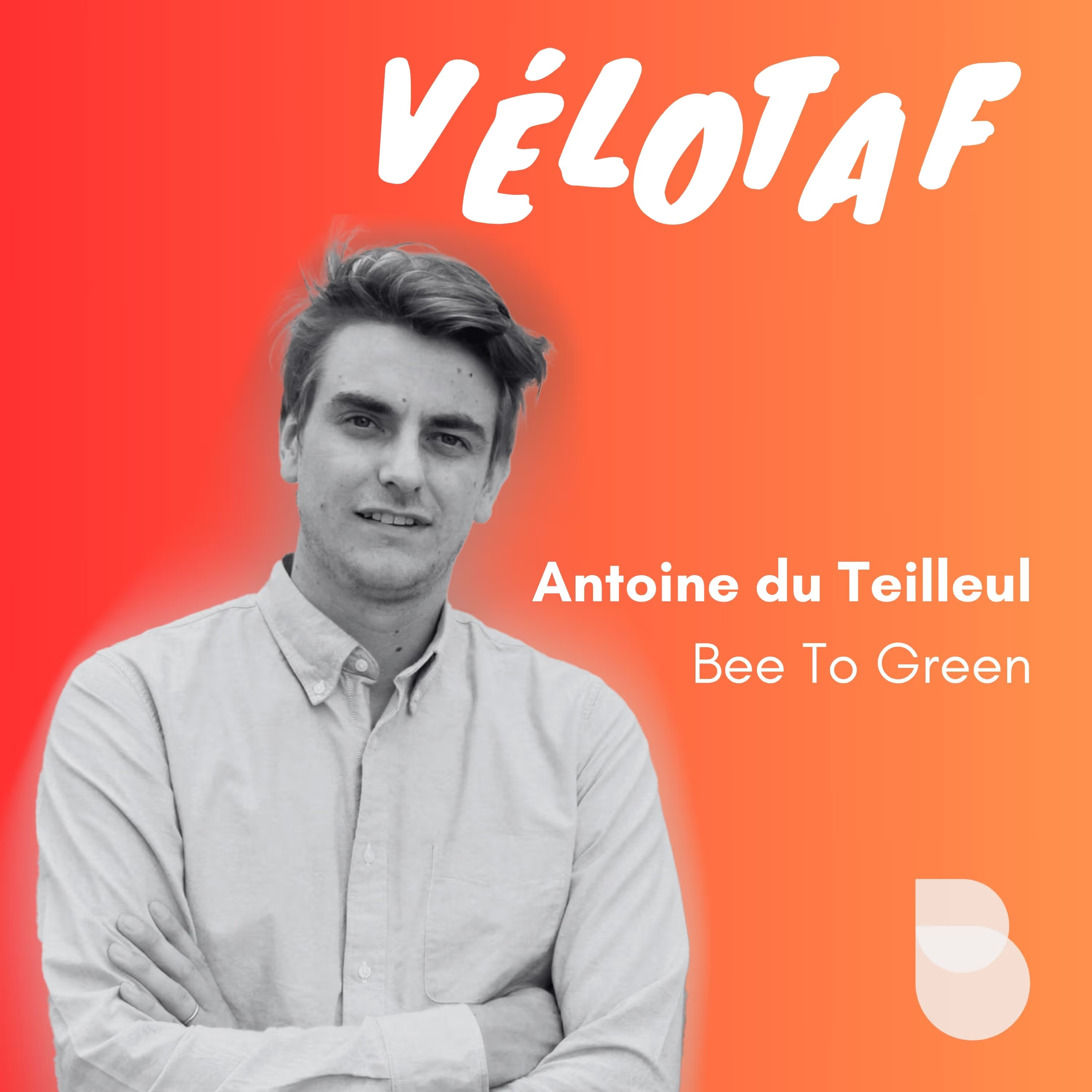
The FMD (forfait mobilité durable, the sustainable mobility allowance) remains a little-known scheme at many French companies. Antoine du Teilleul, co-founder of Bee To Green, built a platform to fill that gap. His goal: to let employers easily offer the bike as an alternative for commuting to work, with full support running from choosing the bike to tracking journeys.
Bee To Green does not stop at an online catalogue. The platform brings together more than 58 bike brands and works with a network of 200 partner shops spread across France. The employee chooses their bike, tries it in store, and the company funds it through the FMD. A process that looks simple, but needs solid logistics and legal groundwork behind the scenes.
“We support the company from A to Z, from the legal framework through to delivering the bike to the employee.”
The FMD: 500 euros exempt from tax
The FMD (forfait mobilité durable) lets companies pay up to 500 euros a year per employee to fund commutes made using soft mobility. This amount is exempt from social security contributions and income tax. Despite this tax advantage, the scheme remains underused. Many HR managers don’t know how to set it up, and many employees don’t know it exists.
“The FMD is 500 euros net of tax. No other employee benefit offers this cost-benefit ratio for the employer.”
Bee To Green handles the administrative side: the company agreement, sworn statements, tracking payments. The company only has to approve the files. This simplification largely explains the rapid take-up of the scheme among the platform’s clients.
Why 30% of the office sector’s carbon footprint comes from commuting
Antoine du Teilleul puts forward a figure that gives the topic some perspective: in the office sector, around 30% of the carbon impact comes from commuting. Offices are relatively energy-frugal compared with factories, but kilometres driven in private cars weigh heavily in the total. The bike, even an electric one, cuts that footprint by a considerable factor.
“In the office sector, the biggest carbon item isn’t heating, it’s employees’ commutes.”
It’s on this reality that Bee To Green builds its case with RSE departments (responsabilité sociétale des entreprises, corporate social responsibility). The bike isn’t presented as a wellbeing gadget but as a concrete, measurable lever for decarbonisation that’s quick to deploy. With around twenty client companies and 6,000 to 7,000 employees covered at the time of recording, the platform is starting to generate real-world data on actual modal shift.
Support rather than a catalogue: the Bee To Green model
What sets Bee To Green apart from a simple bike marketplace is the support side. The platform offers awareness workshops at companies, try-out sessions with demo bikes, and post-purchase follow-up to make sure the employee actually uses their bike. The partnership with GeoVélo also makes it possible to offer optimised routes for beginner bike commuters.
“We do not stop at selling a bike. We build a cycling culture within the company.”
Antoine du Teilleul stresses this point: offering a bike isn’t enough to change habits. The psychological, logistical and practical barriers have to be removed. Where do you park the bike at the office? How do you deal with sweating? What kit do you need for the rain? These questions, trivial as they may seem, stop many employees from following through. Bee To Green’s on-the-ground support aims precisely to answer them.
From scooter to bike: Antoine du Teilleul’s personal conversion
Before founding Bee To Green, Antoine du Teilleul got around Paris on a scooter. His conversion to the bike didn’t come from an abstract ecological conviction but from concrete experience: the bike was faster, cheaper and more enjoyable than the motorised two-wheeler. This personal experience feeds the platform’s philosophy: the bike sells better through proof than through talk.
“I gave up the scooter the day I realised the bike was saving me time, not costing me time.”
This pragmatism carries through into Bee To Green’s commercial approach. No greenwashing, no moralising. The main argument stays economic and practical: the FMD funds the bike, the bike saves time, and the company improves its carbon footprint. A three-part case that speaks to HR managers and employees alike.
The cultural barriers to bike commuting at work
The episode points to a French paradox: the legal framework exists (FMD, the bike bonus), infrastructure is improving, but take-up remains slow. Antoine du Teilleul singles out the car culture still dominant at many companies, particularly on the outskirts of big cities. The bike is seen as a leisure activity, not a way of getting to work.
Bee To Green is trying to shift this perception by working directly with management boards and works councils (CSE). The idea: make the bike a visible employee benefit, on the same footing as luncheon vouchers or health cover. When the bike becomes part of the HR package, it changes status in employees’ minds.