The episode in detail
300 ski resorts by bike: the origins of an extraordinary challenge
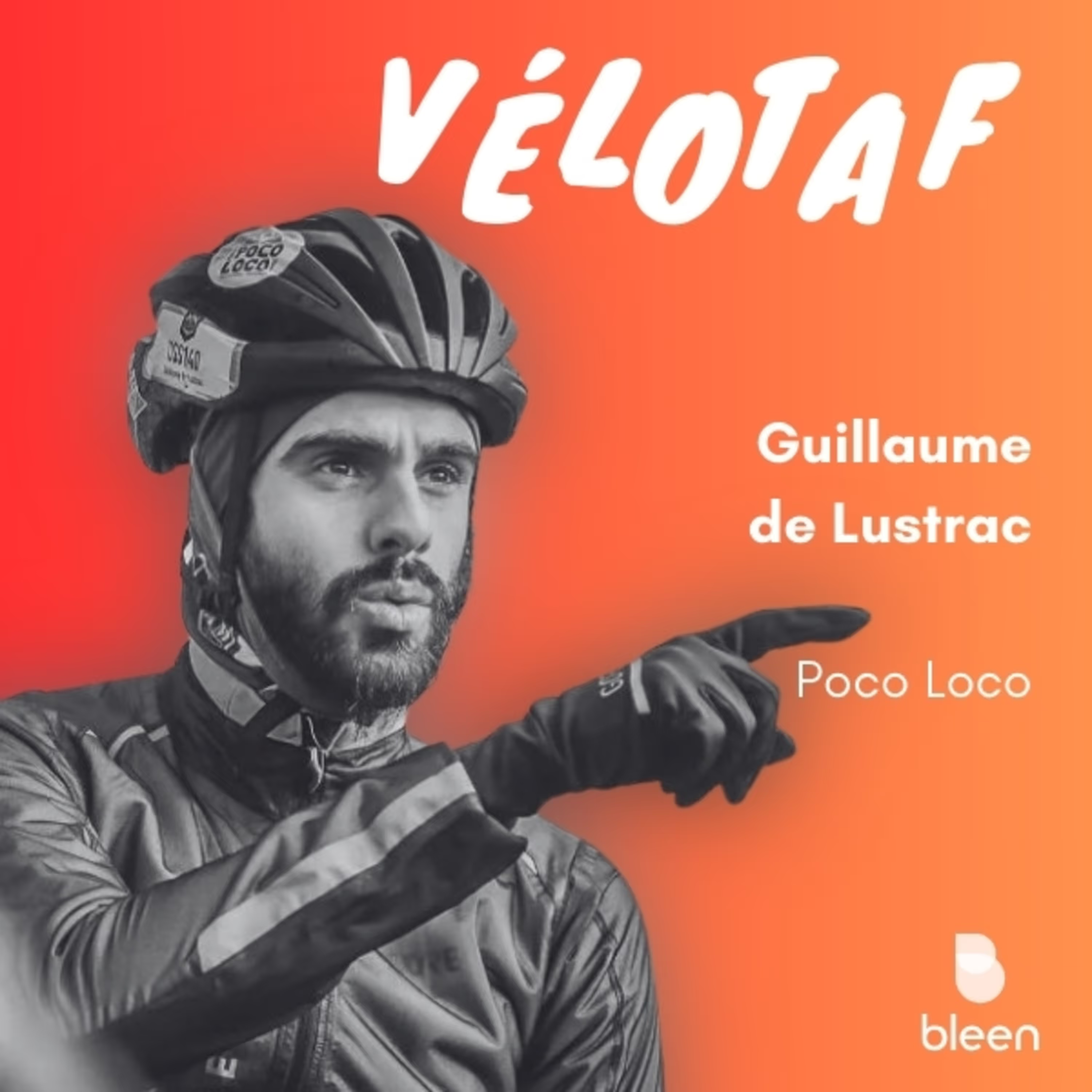
Linking France’s 300 ski resorts by bike in 100 days means 9,500 kilometres and 200,000 metres of elevation gain. Guillaume de Lustrac, a carbon footprint consultant and ultra-cyclist, designed this ski resorts’ Tour de France as a project with two aims: sporting adventure and an environmental inquiry into the future of the mountains. The idea came from riding with Maximilien Schnell, a full-time bikepacker who has been travelling the world for more than five years and who was tackling every road in Europe above 2,000 metres of altitude.
“Setting off for three months just for my own enjoyment feels like a bit of a waste. I like trying to bring something more to it.”
From an ultra-racing record to documentary bikepacking
Guillaume came from distance swimming before moving into triathlon, then ultra-cycling. Race Cross France, the Pan Celtic Race (2,500 km), the self-supported Desertus Bicus in Spain, a night ride from Lyon to Geneva: his record in long-distance races is solid. He has completed two Embrunmans and finished an Ironman in under 10 hours. He also holds the world record for the backwards marathon (3h25) and for the largest GPS drawing on Strava, the Olympic rings, 2,200 km in 10 days with Vincent Brémont.
The bikepacking realisation came on a 300 km ride between the Vercors and the Côte d’Azur. The variety of landscapes, the encounters, the local specialities: all of it concentrated into a single day on the bike. He then founded Poco Loco to help other cyclists get started in bikepacking.
Logistics of a bike tour of France: the puzzle of 300 contacts
Physical preparation was not the problem: Guillaume rides all year round. The logistics, however, nearly brought him down. Contacting 300 resorts meant sending messages to more than 500 people: mayors, resort managers, tourist offices, members of parliament, ski instructors, farmers. Finding them one by one, on LinkedIn or by email. Building an optimal route that respected the opening dates of mountain passes (the Iseran only opens in July, the Tourmalet was blocked). When the first route turned out to be impossible, everything had to be redone: a week of work lost, and every contact had to be reached again with new dates.
“When I set off, I was on the verge of burnout. I was going to bed at 2am, 3am. I told myself: finally, I’ll be able to ride and think about something other than logistics.”
Route: from the Vosges to Lake Geneva via Mont Ventoux
The route started from the northernmost resort, in the Vosges, then the Jura, the Massif Central, and the Pyrenees from west to east as far as Font-Romeu. He rode across to the Southern Alps, then up to the Northern Alps, finishing at Lake Geneva. Every link between mountain ranges was covered by bike, transitions included.
Among the surprising resorts was Mont Serein, a ski resort on Mont Ventoux reached via the Malaucène side. Guillaume made a 250 km detour to include it. The Col d’Allos, where the road keeps collapsing, did not even reopen that year. The Tourmalet and the Iseran were also closed when he passed through.
Equipment and partners: titanium bike and recycled textiles
The bike used for the challenge is a titanium model made by CMT, an Alpine framebuilder specialising in frames with a lifetime guarantee. Titanium offers strength and comfort over long distances, a decisive advantage over the carbon frame originally planned. Max Schnell, a product tester for Decathlon and an experienced bikepacker, advised Guillaume on his choice of equipment.
On the clothing side, Vélor supplies cycling gear made from marine waste and recycled materials. Two financial partners, Taker for carbon footprint assessments and Belbéoc for managing communal trees, completed the budget. Crowdfunding of 6,000 euros covered the costs of the documentary “Nouvelles Pistes”, filmed by a videographer present for one day per mountain range, four days for the Alps.
“Since I self-fund my adventures, I don’t have a sponsor telling me not to say certain things. I think that freedom matters.”
Environmental awareness and ultra-cycling
Guillaume’s environmental awareness developed over eight or nine years. Initially resistant to messages about cutting meat or flights, he was confronted with his own carbon footprint: daily efforts wiped out by a single return trip to Canada. The shift eventually touched every part of his life, from food to energy to waste.
Cycling came late in his sporting path, first as training for triathlon, then as a means of travel. Ultra-cycling, which kept running during Covid when other competitions were cancelled, was his way in. Combining an endurance sport with environmental engagement gives meaning to every kilometre.
Bikepacking: the art of travelling light by bike
The bikepacking format (frame bags, self-sufficiency, no support vehicle) offers a flexibility that ultra-racing does not have. Losing half a day to wait for a bag or to reorganise a route is manageable, whereas in a race it means elimination. That flexibility absorbed the setbacks of a project put together in two and a half months: Guillaume started serious preparation in February for a mid-April departure.
“Once you catch the bug for cycling and bike travel, I don’t know if there’s a way out. It’s hard to get clean of it.”
The implicit advice: don’t wait for everything to be perfect before setting off. Postponing by a year means never leaving. Accept imperfection and do the best you can with the time available.