The episode in detail
From club cycling to solo travel: a reconversion through the bike
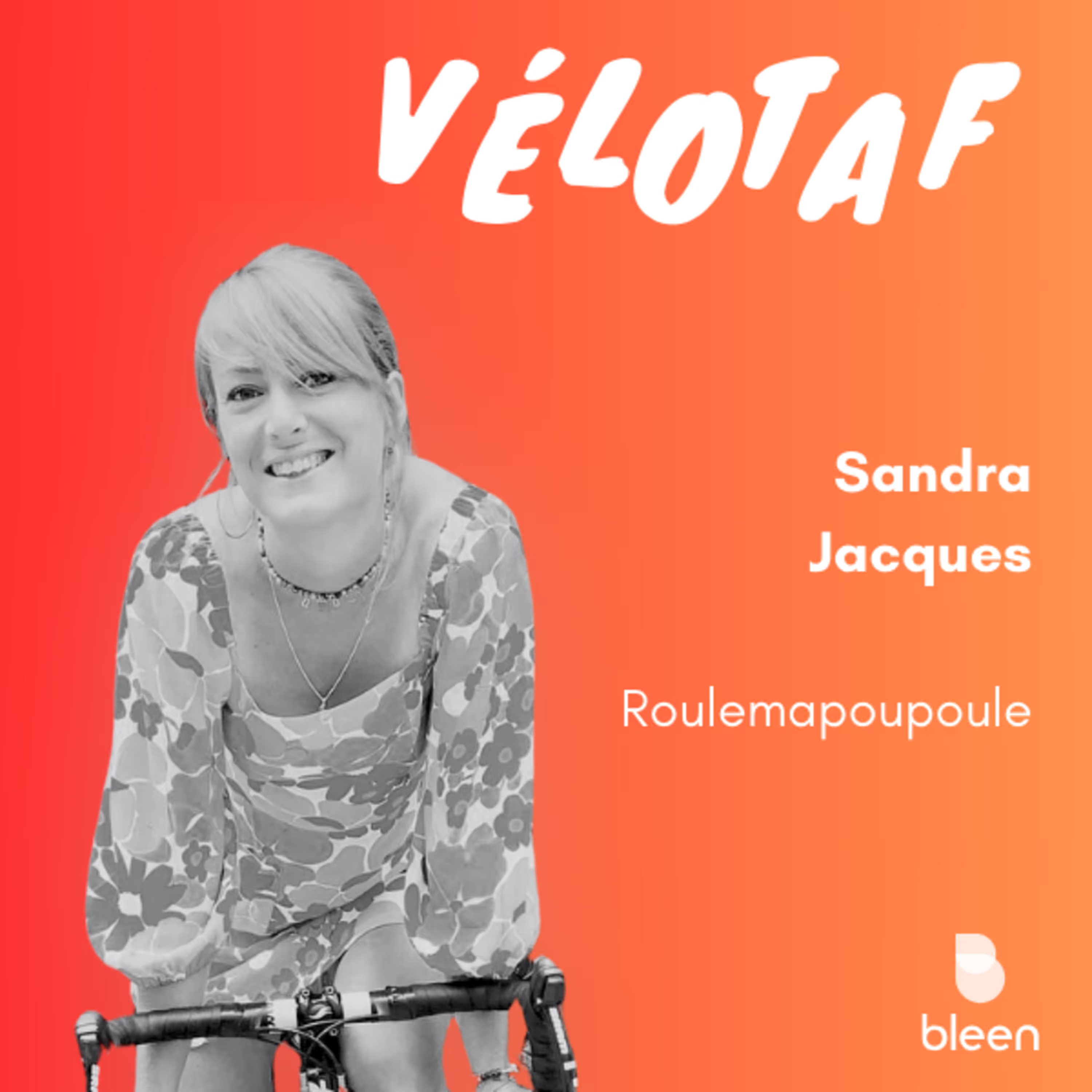
Sandra Jacques discovered road cycling at 20, drawn in by her 13-year-old younger sister, who had decided to join a club after watching the Tour de France go by. Their father followed to accompany the training sessions, and Sandra joined in turn. Two women in a men’s club, races where she found herself dropped after the first lap, but also two entries in the Étape du Tour, including a memorable Megève-Morzine ride with the family in 2016.
Then came the fatigue. Training in all weather, the pressure of performance. Sandra “gave cycling the cold shoulder” for several years. The rediscovery came from a completely different angle: solo travel. In 2021, in the middle of a professional rethink after 13 years of teaching, she decided to leave. A friend asked her the decisive question over drinks: wasn’t the lack of proper gear just an excuse?
“I had this friend who said to me: Sandra, isn’t that just an excuse? And I thought, he’s so right.”
Her father fitted a rack to her road bike with hose clamps, a friend lent her camping gear, and she set off. No need for a specialised bike, no need for a large budget. The first trip changed everything.
Roule ma Poupoule: when writing meets bike travel
The blog started “as a joke”, a travel diary meant for friends. Sandra created an Instagram and Facebook account under the name Roule ma Poupoule, a name she first found amusing before watching it become her brand. Posts shared in cycling Facebook groups found their audience. A community formed.
Recognition grew over time. Sandra gets recognised in the street, sometimes with no cycling context at all. On the Île de Ré, while walking, a follower stopped her: “I love what you do.” The blog also opened a professional door. Magazine 200, a leading quarterly on cycling, contacted her through social media. For the past two years, she has written a regular column called “Sandra est en voyage”, with complete freedom on subjects.
“Unlike web writing, which is formatted around search rankings, here I get to write freely, in a more literary style. Magazine 200 is really my little treat.”
The tandem as a tool for urban outreach
The idea took shape during her solo trips, after hearing the same comment again and again: “I’d love to do that, but I can’t.” Sandra wanted to prove otherwise by meeting ordinary people. Her first attempts with a standard bike did not work. People did not have a bike to hand, or were not available. A friend suggested the tandem.
The tandem sparks curiosity, works as a conversation starter, and solves the equipment problem. Sandra picks people up at their bus stop and rides them to the station. The idea came to her one day as she rode through Fontainebleau with the back seat empty. Why not fill it?
21 days to get Fontainebleau on a bike
The results of the tandem experiment are modest but real. Yves, her first bus-stop passenger, bought his wife a mountain bike the following week. Sandra is preparing a series of 21 videos, one a day until the first day of spring. The format plays on the idea that it takes 21 days to change a habit. Her father films her as she rides around Fontainebleau on the tandem, looking for volunteers.
Refusals are frequent, but always come with encouragement. Even without hopping on the back, passers-by smile and cheer her on. The surprise of it breaking into people’s daily routine creates an impact that words alone would not.
“I can’t guarantee my action will get them on a bike, but catching them off guard in their daily routine shakes things up a little. In the evening, they’ll have something to tell.”
Bike travel and women: demystifying solo riding
Feedback from women counts among Sandra’s greatest satisfactions. Women write to tell her that she gave them the push to start. The barriers they put up for themselves (fear of getting lost, not knowing how to pitch a tent, getting a puncture) are surmountable. Sandra has been travelling by bike since 2021 and has not had a single puncture.
At the bike travel festival in Le Mans, four women spoke about solo travel in front of a packed room, people standing and sitting on the floor. Three of them had ended up travelling alone by accident, not by initial choice. All of them demystified the practice. Not a word about performance. Bike travel, as they describe it, is an adaptable way of moving: 20 km in a day or 150, depending on the mood and how you feel.
“Women put up even more barriers for themselves. They’re afraid they won’t be able to navigate on their own, afraid of getting lost. These are barriers that are easily overcome.”
Overcoming your own barriers: the common thread
Sandra was not an athlete. Last picked for teams at school, no natural aptitude. Sport came late, at 20. That is exactly what she points to: if she could do it, anyone can. Bike travel is not an extreme sport.
The question comes up often: do you come back transformed from a bike trip? Sandra does not think so. It is more a way of putting your life on pause. The problems are still there when you get back, but you see them differently. The film “À bicyclette” retraces the journey of Mathias’s son, and Mathias’s own answer confirms it: no, he did not find what he had come looking for. And that might be the point.
“I don’t think it transforms you deeply. But it lets you see things differently. It really is a way of putting your life on pause.”
Travelling by bike with your dog
For her first trips, Sandra had her dog looked after. Then he grew older, and she no longer wanted to leave him behind. She fitted him in a basket on the rack (10-11 kg), with a small trailer used in turn for rest periods. The pace changes: more stops, shopping done quickly while the dog waits outside, a shower rushed through.
This summer, Sandra and her dog rode from Fontainebleau to Brest. The train journey back, which she had been dreading (dismantling the trailer on the platform, managing the dog and the panniers), went off without a hitch. Tip: catch the regional TER train at its terminus to get an empty carriage, and allow time between connections.
“I regret not doing it sooner. You always imagine things will be more complicated than they actually are.”